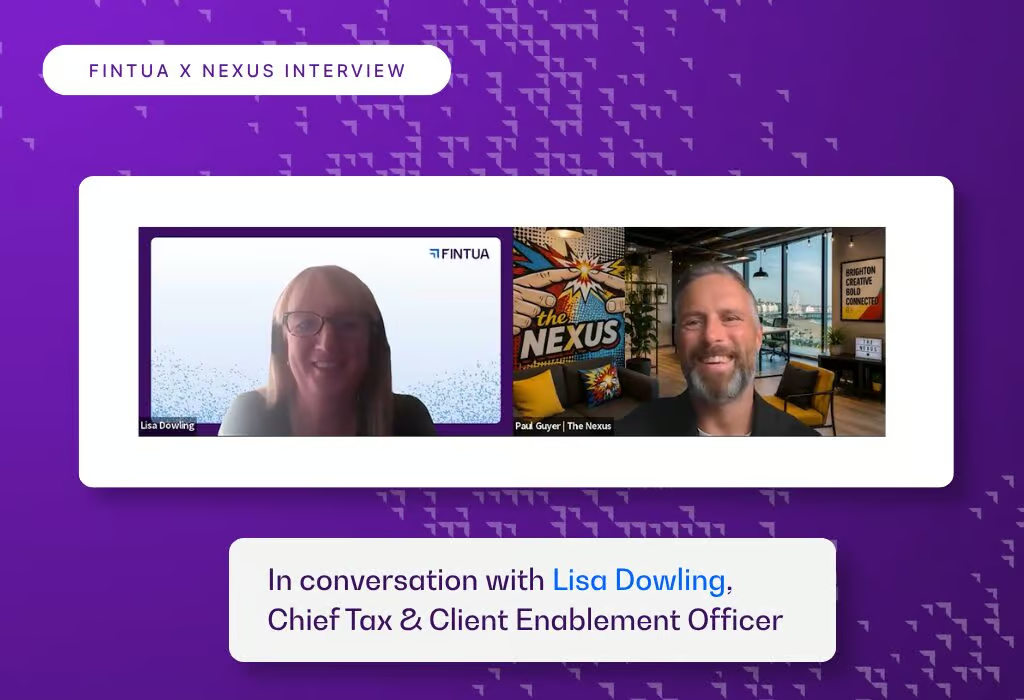

Our Chief Tax & Client Enablement Officer, Lisa Dowling recently sat down with Paul Guyer, The Nexus, to have a discussion around all things indirect tax. Including the evolution of tax technology, why eInvoicing will report your mistakes faster than ever, why VAT recovery is strategic again and why the safety net in tax compliance is still human.
Lisa’s career in tax technology
Paul: So, Lisa, you’re a well-known figure on the conferencing and the thought leadership circuit. Tell us about your career in tax tech and what it is you do nowadays?
Lisa: It’s funny when you say “career in tax tech” as if tax tech is this new thing. I certainly didn’t start in tax technology. It was a very traditional VAT compliance role at a company in Dublin 25 years ago, and like most people that work in VAT, it wasn’t the intention. I started out chasing invoices for payment for a VAT compliance team of about four people. And that expanded to about 80 people in the 10 years that I was with that company. I learned on the job about VAT compliance and I spent that time bringing in automation and standardisation.
Then I moved to Taxback International, now Fintua, where I’ve been for around 15 years. I started in the world of VAT recovery, managing auditors that went on-site to pick receipts and invoices out of client files. Imagine it: staple removers, photocopiers, this really manual process. Later, I moved back into VAT compliance within Fintua and the role has evolved into tax technology, through our compliance solution, Comply. But it’s still rooted in the fundamentals: the rules, the leglisation and the changing landscape of VAT.
Why is there renewed interest in VAT recovery?
Paul: There’s been quite a lot of activity and development in the VAT reclaim space. Since COVID, there was a bit of a shake-up for obvious reasons around T&E, and we’ve also had acquisition activity involving reclaim technology.
Lisa: With COVID, obviously travel stopped. That’s where Comply really went through its development on the VAT compliance side of things. But recovery has always been there. Since COVID, travel has taken off again and we’re back to the status quo from before COVID with regards to travel. Those employee expenses are back.
With the advancement of technology and automation, VAT recovery is now a much easier process for businesses. In previous years, effort versus reward was a consideration. Now that’s going away.
The automation of VAT recovery is really enabling businesses to recover their foreign VAT, and also domestic VAT on T&E expenses. That can be used as a real source of cash flow to finance some of the other technology and automation requirements we’re seeing because of eInvoicing, ViDA and all these things.
There is a renewed focus on VAT recovery because businesses offering the solution, like Fintua, can make it much easier for clients. It’s not this manual process anymore.We’re able to pull invoices and images from your expense management system. We’re able to use OCR technology and automation. We’re defining the rules, and our teams can work with greater volumes because of the technology. We can focus on the exceptions and use our knowledge on those country-specific exceptions.
VAT deduction and VAT recovery are a pillar of the VAT system. It’s a right to deduct VAT. It has always been our core business, and we’re very passionate about it. I think it’s a great way to help fund the VAT compliance technology that’s going to be needed in the future.
“The automation of VAT recovery is really enabling businesses to recover their foreign VAT, and also domestic VAT on T&E expenses. That can be used as a real source of cash flow to finance some of the other technology and automation requirements we’re seeing”
Has technology changed the effort-vs-reward question with VAT recovery?
Paul: You mentioned effort versus reward. My understanding was that a lot of reclaim services were provided using a contingency model, where the customer pays a proportion of the reclaim enabled by the provider. Surely the effort was mainly on the provider side? Has that changed dramatically in the last few years with technology and digitisation? Are you seeing more demand because it’s an easier process to manage?
Lisa: It still comes down to knowledge, the same as in VAT compliance. You want to work with a business that understands the exceptions and anomalies from its knowledge and experience. Technology is great for the repetitive work. OCR technology is wonderful for picking information out of invoices. I don’t have to go on-site with staple removers anymore. All of that has been replaced by technology.
But you still need to manage the exceptions.
Tax offices are getting better with technology. We’re seeing more questions on submitted claims, because they’re using AI-generated questions and flagging anomalies in the data. Again, those are things service providers have to deal with using experience. That’s the difference when you’re choosing a provider for VAT recovery and compliance. It’s not just about the automation. It’s not just about submitting the claim faster. It’s not just about filing the return. It’s about getting it right.
It’s understanding the business, country-specific rules and tax offices, including what they’re looking for and how to deal with the questions they’re asking. Technology allows providers to handle the repetitive work so that they can focus on those areas.
“It’s not just about submitting the claim faster. It’s not just about filing the return. It’s about getting it right.”
Why bring VAT recovery, compliance, eInvoicing and payment together?
Paul: How does it make sense to have compliance, eInvoicing and reclaim all under the same hood? What does the reclaim element bring to that tech stack or full picture?
Lisa: It’s about having an overall view of your entire VAT process. We also have Fintua Pay, so it becomes end-to-end: VAT compliance, recovery, eInvoicing and Pay.
Recovery is interesting because, if we’re dealing with domestic VAT recovery, it’s part of your VAT return. We’re analysing the expenses and producing a report that ultimately slots into your VAT return. Or you may have to amend previous returns, put it into an annual return or follow whatever the process is in that country. It makes absolute sense that this sits within the same platform where you prepare your VAT return.
On the foreign side, you’re talking about refunds coming in. It’s important from a cash flow perspective to understand when those refunds are due and ensure you’re chasing them. It gives you overall visibility of your VAT processes in one place.
And on the Pay side, the process doesn’t stop when you submit the VAT return. In the majority of cases, you also have to make the payment. Having all of that under one roof gives great visibility and oversight for VAT managers and directors.
Watch the full interview here.
Paul: Where does eInovicing fit into this connected process?
Lisa: eInvoicing is now fundamentally part of the return process.
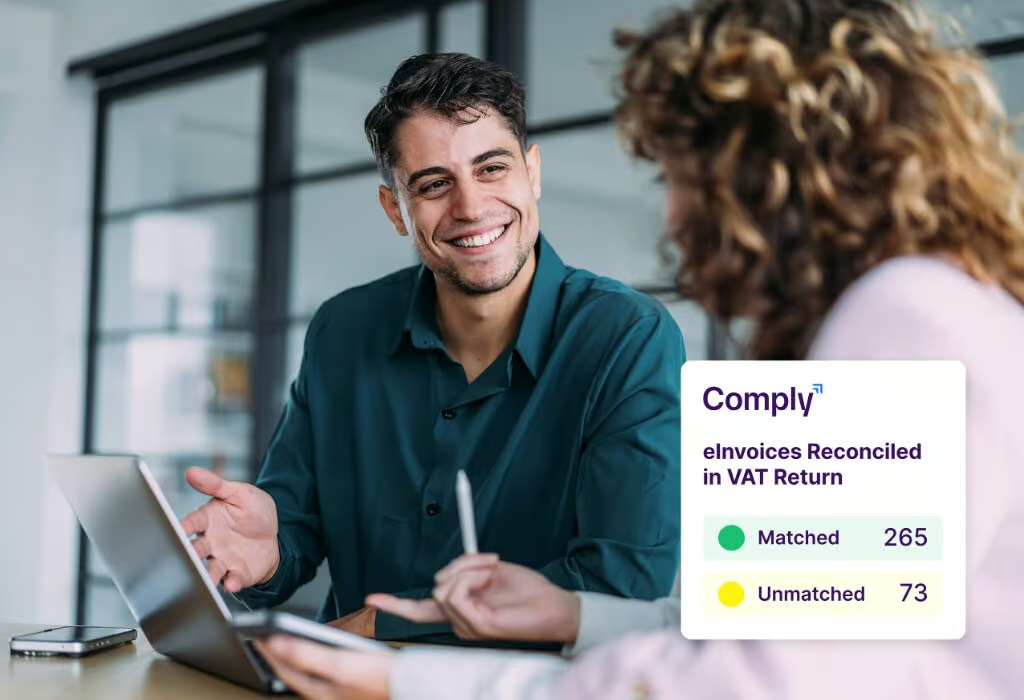
We’re raising electronic invoices and submitting transactional data in real time to tax offices. Each country has its own flavour, which is adding complexity for businesses at the moment. But that’s part of the VAT return process because ultimately what you report through eInvoicing has to match what you’re reporting on your VAT return.
You need a way of understanding what has been reported from an eInvoicing perspective and then looking at how you’re preparing your VAT return to make sure there aren’t unexplained mismatches.
“There will always be mismatches. It’s not about getting it to reconcile completely. It’s about understanding the differences and being able to explain those differences when tax authorities come knocking and asking questions, which they will“.
Will VAT compliance become real-time?
Paul: We’ve got reclaim building one part of the VAT return and eInvoicing building another. Is that happening sequentially, or is it all happening in real time and building a dynamic position minute by minute? How does it work in practice?
Lisa: At the moment, the eInvoicing side is more real-time. The VAT return preparation is happening more periodically, and reconciliation is still periodic.
Before submitting the return, you’re comparing the eInvoicing data with the VAT return data. But that will gradually move towards more of a real-time scenario. We can pull in eInvoicing transactions reported to the tax office in real time. If you also have a feed of the key data that makes up your VAT return in real time, you can do these comparisons on a daily basis and identify differences, anomalies or checks.
The scope of reconciliation really has to develop. We need to understand which transactions are in scope and out of scope for eInvoicing. You want to limit the noise for clients. You want to set thresholds and rules.
Everybody’s talking about reconciliation, but we’re really working to develop it so that it’s genuinely useful for clients. It shouldn’t become another source of compliance noise. It needs to help you respond to questions from the tax office down the line.
How will eInvoicing change the way tax teams work?
Paul: Compliance teams still seem to be on that journey from periodic monthly compliance towards changing how the work cycle happens. Do you see that changing?
Lisa: The rate of change right now is really significant. eInvoicing is pushing everyone onto the same train at the same time, whatever stage they’re at. It will force more regular reconciliation. The VAT return will be prepared as you go. At the end of the month, you’ll have the final true-up of the figures, but you’re going to be working in your compliance platform daily rather than waiting. That’s a mindset shift, and I think eInvoicing will force that shift.
We also have to remember that we’re moving towards a world of pre-populated VAT returns. You’re going to be handed your VAT return and told: “Confirm this, or tell me what’s wrong.” The mindset is definitely shifting in that direction.
Is eInvoicing just about connectivity?
Paul: A lot of what we hear in the market around eInvoicing is similar. We talk about the mandate date, the model and connecting to an API to become compliant. With your compliance hat on, is that really the story, or is it a little different behind the scenes?
Lisa: I think it’s a bit different. Everybody talks about connectivity, getting the invoice from A to B. That really is the easiest part. Nobody cares how you send it.
It’s about getting it right. Compliance is moving upstream in the process and you’re reporting data before some of the traditional compliance checks happen.
Even with tax determination, it can be so intricate that you can still get a lot of things wrong. The compliance function was always the safety net. You had the month to review everything. Those checks still have to happen, but maybe they’ll happen in more real time. You could very efficiently report an incorrect VAT treatment through eInvoicing. That’s why eInvoicing married with a compliance function should help find these issues.
eInvoicing is very good at ensuring you’ve covered mandatory fields, country-specific details and formatting requirements. But the compliance solution is your rule checker and rate checker. You still need those additional compliance checks to make sure things are correct.
Within Comply, we’re running standardised, consistent 300-plus checks on the data to pinpoint anomalies for either our compliance team or the client’s compliance team to check.
“It’s not just about making sure you’ve filed the return. It’s making sure you’ve filed it correctly and that the underlying VAT treatments are correct.”
What does human intelligence add to tax technology?
Paul: That’s a convincing case for keeping compliance and eInvoicing together, and plenty of traditional compliance vendors have bought eInvoicing technology to do just that. What’s different about you is the managed service and the client relationships behind it. What does that show you that pure-tech players might miss?
Lisa: We don’t just talk about artificial intelligence. We talk about human intelligence: bringing in the human experience. I think that makes us a bit different from other providers as well. We’ve run a fully managed compliance process for 25 years, and many large multinationals have really small tax teams, so outsourcing to people with that experience is valuable.
Comply was originally built for our internal teams to standardise our own processes and checks. We started with an Excel spreadsheet and tick boxes asking questions like: Does this make sense? Why do you only have sales on this VAT return? Why do you only have purchases? Why are you only filing nil returns? It started with around 20 of those checks and evolved into a rules engine in Comply with more than 300 checks and validations.
That means the same checks are performed on the data regardless of who is managing it. You want that consistency.
For multinationals using the fully managed solution, we can consume the data and apply customer-specific rules. That focuses the compliance team’s attention on the anomalies. We can then go back to the client and ask: What’s happening with this transaction? We’re taking that workload away from the tax team while still understanding their business.
“We don’t just talk about artificial intelligence. We talk about human intelligence.”
How has client feedback shaped Comply?
Paul: Do you have any examples of something that came out of an interaction with a client and made its way into the product?
Lisa: There are lots of things that come into the product from client feedback. One example is greater oversight for accountancy practices. They’re able to manage resources and see which returns or clients have been assigned to internal resources, how they’re progressing and their dates. It essentially becomes work management for accountancy practices. If someone is on holiday or sick leave, you can very quickly reallocate returns across the team. That grew from our interactions with clients and the accountancy practices we work with.
Another example is the errors the technology can identify. We had a report in euros for a Hungarian return containing around 500,000 transactions, but one transaction within that report was actually in Hungarian forint. In a manual process, that might never have been spotted. In the automated solution, the analytics flagged it. The analytics compared the return with the previous return and highlighted the significant difference. The Hungarian forint transaction created a difference of millions, which stood out through the automation.
There are lots of things that have been iterated and reiterated, and we take a lot of feedback from our clients.
Where does AI belong in tax compliance?
Paul: We probably can’t get through a discussion without talking about AI in tax and technology. What’s your take on it? Where does it belong, where doesn’t it belong, and what’s the value it’s bringing right now?
Lisa: Within compliance, I think AI is super. It has made my life so much easier. I can do wonderful things very quickly. We’re using it a lot for research tasks, pulling in and consolidating information and producing summaries.
AI encompasses a lot of processes, and we have AI layered into our solution along the way. But it’s really important that we focus on the intelligence too, using the experience and using the people. The cliché is keeping the person in the loop, but that is absolutely fundamental within compliance. It’s not about filing a return really fast, or just filing a return at all. It’s about making sure it’s correct.
Technology can help you find where things might not be correct, but then it has to come back to judgement. A lot of compliance is about understanding the business, the entities, their interactions, workflows, products, services and customers. Technology allows us to pinpoint where there might be issues or where we need to ask questions, but then it’s the experience and understanding that you can’t beat.
AI is in so much more than we even realise now. It’s simply becoming the way things are done. We’re using AI throughout the compliance process, but keeping that human interaction. We’re very proud of the relationships we have with clients and making sure we provide a really good service. From a compliance point of view, that means challenging the information we’re getting, talking to clients and understanding their businesses.
“We’re using AI throughout the compliance process, but keeping that human interaction.”
Paul: That human judgement layer is what everyone worries is disappearing. Graduates won’t learn VAT coding from boxes of receipts anymore. How long does your model hold?
Lisa: I think it will always remain. New people coming through work in a different way, but they’ll still be able to produce the service we’re trying to give. AI is the Industrial Revolution of our time. When I started my career, there wasn’t a computer on every desk. We had a computer in the office. We used fax machines.
My job didn’t disappear because they put a computer on every desk. Our way of working just changed. People coming through will still have to learn. Maybe it’ll be more focused learning. AI can make us a little lazy because we’re getting summaries and notes.
I think there will be a shift towards natural learning and natural consumption while using AI to make us more efficient and focused. People are curious. People want to learn. We’ll continue to read. It’ll just be a different way of working. Certain parts of our jobs will become super efficient and we won’t have to do them anymore, but there are other fundamentals that I think we’ll keep.
Fintua’s bets for the future
Paul: What bets is Fintua making on this direction of travel?
Lisa: Our focus is really on connected compliance, providing the end-to-end compliance journey. That means integrating all of the solutions and processes that make up VAT compliance, with a view to providing fantastic reconciliation services and managing the pre-population of VAT returns and what that’s going to mean.
It’s also about being flexible to change and having that flexibility within the platform to adapt. For example, we see an announcement from Spain that the buyer is going to have to report on payment status. How does that impact everybody? How does our product respond?
Having connected elements across the compliance process makes us flexible and adaptable. That’s where our focus is going to be and should continue to be. Our product will move and change, and we’ll roll with the times because that’s what we’ve done from day one.
It’s also about listening to clients and seeing what they need, particularly from a reconciliation point of view. We’re digging into what information they want to get back from all this reporting to the tax authorities. Our focus is connecting all the elements of compliance and being adaptable to our clients’ requirements.
Advice for someone starting a career in tax tech
Paul: What advice would you give to people in the early stages of their careers in tax tech or thinking about their next step?
Lisa: Stay curious. Don’t just channel yourself down one road. Remain open-minded that things might change. I’ve done lots of different things throughout my career, always within VAT, but lots of different elements and projects. Go into them open-minded and see what you can gain from them.
Often the hardest tasks you have will teach you the most. The most difficult client engagement might actually teach you the most about the service you need to provide. Show up every day and give it your best.
There’s so much change happening at the moment, so be adaptive and roll with things. Continue to learn forever. When you work in tax, nothing stays still. Legislation changes, so there’s continuous reading, continuous learning and engaging with people. Even from our conversations, Paul, you learn so much from meeting and engaging with new people. In a world of AI, that human interaction is really important.
Always be respectful of your colleagues and clients, and have empathy for people. That’s really important in the VAT world because it’s a small place. Don’t annoy anybody! For new people coming in, just be a sponge. Soak it all up, be flexible and adaptable, and you’ll be great.
Paul: I like that. I agree, it’s a wonderful community and it treats people very well if you show up in the right way. I also like that point about the hard lessons. Those challenging times are often the things that shape us and make us take the biggest leaps. Embracing that is really important. Lisa, thank you. That was a really enjoyable chat. I hope you enjoyed it. I learned a lot.
Lisa: Thanks Paul
Final thoughts
If there’s one thing this conversation makes clear, it’s that tax technology has come a long way, but technology alone isn’t the answer. eInvoicing is accelerating change, VAT recovery is finding renewed relevance, and businesses have access to more automation than ever. But behind all of it, strong tax knowledge and human expertise remain essential.
Authors


Lisa Dowling
Lisa is the Chief Tax & Client Enablement Officer at Fintua and a recognised expert in international VAT compliance and digital tax transformation. With more than 24 years of VAT experience, she leads Fintua’s global tax strategy, regulatory intelligence and customer & partner enablement. Lisa is a regular speaker at international tax and finance events, sharing insights on regulatory change, digitisation and the future of global compliance. At Fintua, she helps organisations navigate regulatory change and simplify compliance in an increasingly digital tax landscape.