
Reconciliation is becoming a critical VAT compliance control. As governments gain access to transaction-level data through eInvoicing and continuous reporting mandates, businesses must ensure their ERP, eInvoicing and VAT return data remains aligned.
For decades, VAT compliance followed a familiar process. Businesses collected transactional data, prepared VAT returns, submitted them and responded to audit queries if, and when, they arose. VAT returns were ultimately treated as the single source of truth.
That model is rapidly evolving as we enter into the new era of ViDA (VAT in the Digital Age). In this new era, tax authorities are no longer relying solely on month-end or year-end VAT returns to assess compliance. Instead, they are increasingly using detailed transactional data to validate, cross-check and identify discrepancies before a VAT return is even submitted.
This shift is placing a new focus on one area that many businesses have historically treated as a periodic or manual exercise: reconciliation.
Today, reconciliation between eInvoicing data, ERP systems and VAT returns is becoming a critical control layer within the VAT compliance process. As highlighted during Fintua’s recent webinar, The new control layer in VAT compliance: why reconciliation matters, “if you can’t reconcile it, you can’t trust it.”
Why tax authorities are demanding greater visibility
So why are countries pushing ViDA? Behind the move towards eInvoicing is a clear objective: reducing the VAT gap. The VAT gap is the difference between the expected VAT revenue and what governments are actually collecting and is driven by tax fraud, business errors, systematic non-compliance and complex policy choices.
The latest EU figures show a VAT compliance gap of €128 billion, representing an increase of €27 billion compared to the previous year. Governments increasingly view traditional, aggregated VAT returns as insufficient for identifying non-compliance, errors and fraud. To address this, many jurisdictions are implementing mandatory eInvoicing, Continuous Transaction Controls (CTCs) and real-time reporting to close the gap. Rather than waiting for month-end or quarter-end filings, tax authorities are gaining direct access to transactional data throughout the reporting period.
The result is a fundamental shift from periodic audits to continuous compliance.
How is eInvoicing changing VAT returns
Historically, you would file your VAT return and six months or two years later, an auditor would ask for invoices and supporting documentation. Soon, tax authorities will receive transaction-level data before your VAT return is even submitted, suppliers will transmit eInvoices directly to government platforms within seconds or days, the authority will aggregate this sale and purchase data and use it to either pre-populate your draft VAT return or run automated cross-checks. What does this mean for your business? It means your VAT return is effectively audited before you submit it. Any inconsistency between your ERP and the government’s eInvoicing platform will trigger an instant red flag and potential questions, tax verifications, or even audits.
Such queries will become highly detailed, data-driven challenges focused directly on data mismatches. So they are no longer going to be high-level, general questions. They can target each and every inconsistency that they find.
The eInvoicing myth – it doesn’t solve everything
One of the biggest misconceptions surrounding eInvoicing is that it automatically guarantees compliance and the authorities will be able to do the VAT returns for us. However, while eInvoicing provides greater visibility into transactional activity, it doesn’t eliminate the complexity of VAT determination and reporting.
For example, tax authorities may have access to invoice-level data, but they still cannot determine:
- Input VAT deductibility restrictions
- If a purchase was blocked or any partial exemption rules
- Capital goods scheme adjustments
- Annual turn-ups
- Bad debt relief claims
- VAT group complexities that can bypass eInvoice matching
- Cross-border transaction nuances
- Timing differences between systems
As a result, discrepancies between government-held transaction data and a company’s VAT return remain inevitable. Without an effective reconciliation process, businesses risk submitting VAT returns that do not align with the data already available.
Why eInvoicing reconciliation is now a compliance necessity
As tax authorities receive invoice-level data before VAT returns are filed, any mismatch between transactional records and reported VAT positions can trigger automated controls, queries or audits. These discrepancies may include:
- Missing invoices
- Incorrect VAT amounts
- Incorrect VAT rates
- Invalid VAT registration numbers
- Transaction classification issues
- Differences between ERP and eInvoicing systems
What makes this new environment different is the speed and precision with which inconsistencies can be identified.
Future audit queries are likely to become increasingly data-driven, focusing on specific transactional variances rather than broad requests for supporting documentation.
The question is no longer whether discrepancies exist. The question is whether you find them first, or the tax authority does.
Reconciliation as the new control layer
As organisations adapt to digital reporting requirements, reconciliation between eInvoicing data and VAT return data is emerging as the control layer that sits between operational data and VAT filing. Manual spreadsheet reconciliation ad random sampling won’t cut it anymore. Automated reconciliation processes built into your VAT return workflow enables businesses to gain confidence that VAT filings are supported by accurate, consistent transaction data and create a clear audit trail. Intelligent reconciliation technology allows you to ingest eInvoice data automatically, match it in real time or near real-time to your ERP and implement rule-based variance detection.
With reconciliation technology, rather than discovering issues during an audit months later, tax teams can identify and resolve discrepancies before VAT returns are submitted. This transforms VAT compliance from a reactive activity into a proactive control process.
While compliance is often the primary driver for eInvoice reconciliation, the benefits extend well beyond meeting regulatory requirements.
Having an automated reconciliation workflow can help businesses:
- Improve data quality across systems
- Reduce manual review processes
- Accelerate month-end close
- Minimise audit disruption
- Improve readiness for future mandates
- Faster tax refunds
Perhaps most importantly, reconciliation creates greater confidence in the data that underpins tax reporting and broader business decision-making. When finance and tax teams are working from consistent, validated datasets, the entire organisation benefits.
What tax leaders should do now
As eInvoicing mandates continue to expand globally, businesses should not wait until regulations become mandatory in every jurisdiction.
Key actions include:
1. Map your data flows: Understand how data moves from ERP systems through eInvoicing platforms and ultimately into VAT returns. Are there any breaks in the process?
2. Establish reconciliation rules: Define how transactions should be matched and what variances require investigation.
3. Strengthen internal controls: Make reconciliation a mandatory step before VAT returns are filed.
4. Run reconciliation exercises today: Use existing data to identify gaps and inefficiencies before future mandates take effect. Don’t wait until the mandate goes live
Introducing Comply x eInvoice reconciliation
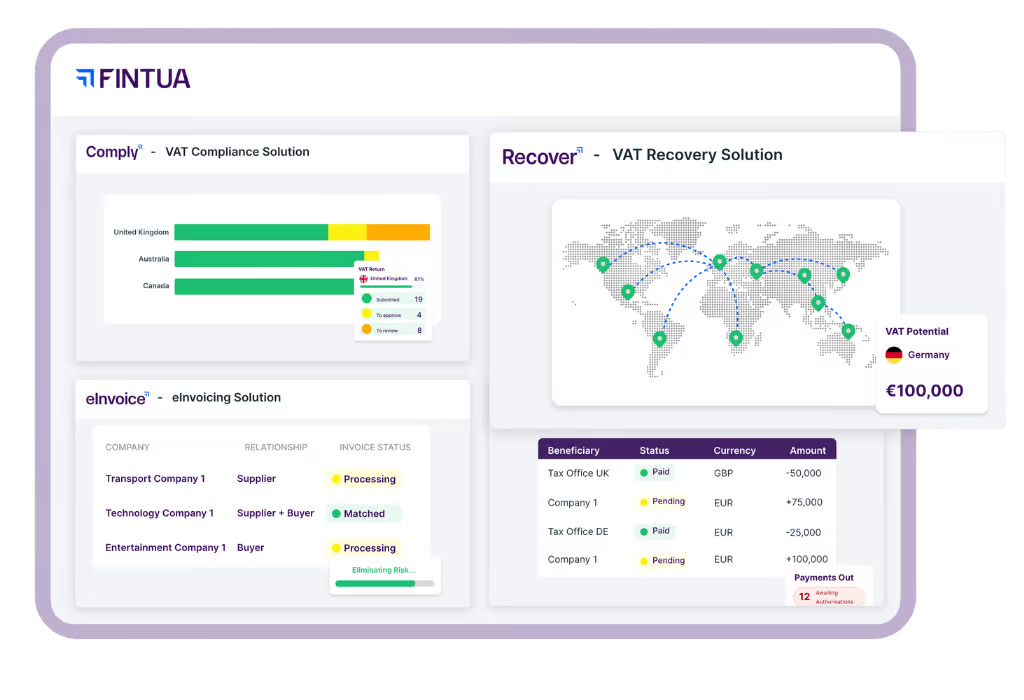
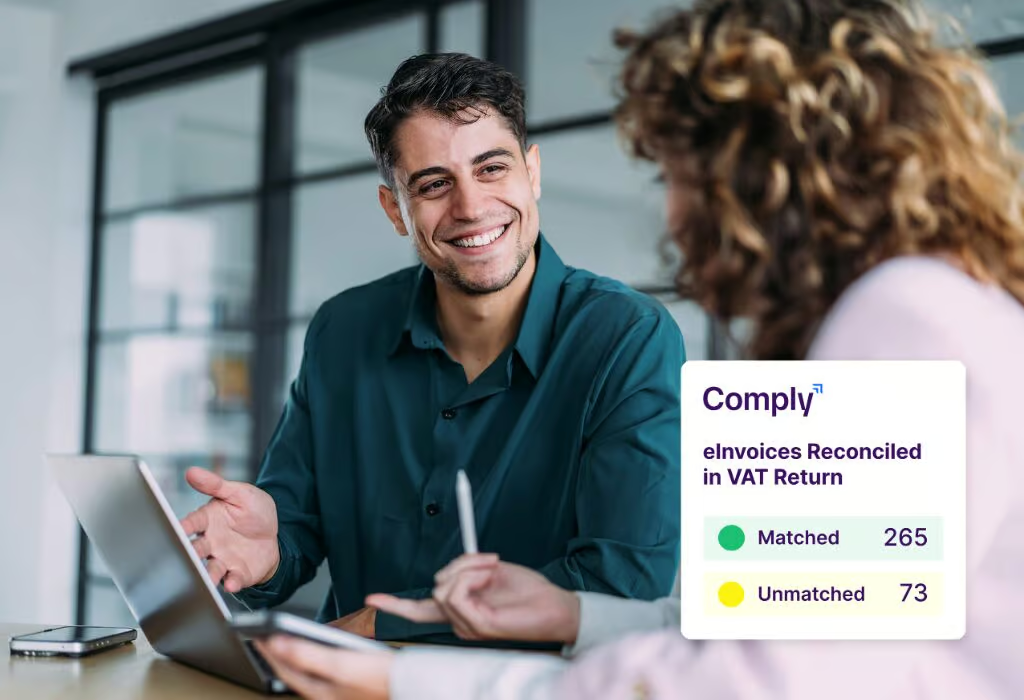
Our new eInvoice reconciliation feature enables you to reconcile VAT return data within Comply against eInvoice data so you can identify discrepancies before submission.
You can see it in action in our on-demand webinar: The control layer in VAT compliance: Why reconciliation matters