Indirect tax compliance for Accountancy Practices
Standardise indirect tax processes globally, across your client base with flexible data templates and controlled workflows, enabling your team to offer a global solution for large multinational clients.
85% of Fortune 500 companies choose Fintua






Managing client indirect tax compliance at scale is complex

Every client is different
Source data varies by ERP, marketplace and file format, manual consolidation doesn’t scale

Many regimes, many calendars
VAT, OSS/IOSS, eInvoicing, VIES/EC Sales and Intrastat have different periods, deadlines and files to generate

Handoffs and cover
Reviewer and approver chains vary by client, while holiday cover and escalations are easily missed in email

Evidence on demand
Clients and authorities expect invoice level traceability and quick, defensible responses

Margin pressure
Spreadsheets and ad hoc scripts consume capacity and increase rework risk
Comply Key Benefits
Simplifying client indirect tax compliance for accountancy practices
Reusable client onboarding
- Create templates, mappings and rules once, then apply them across similar clients to shorten time to first filing.
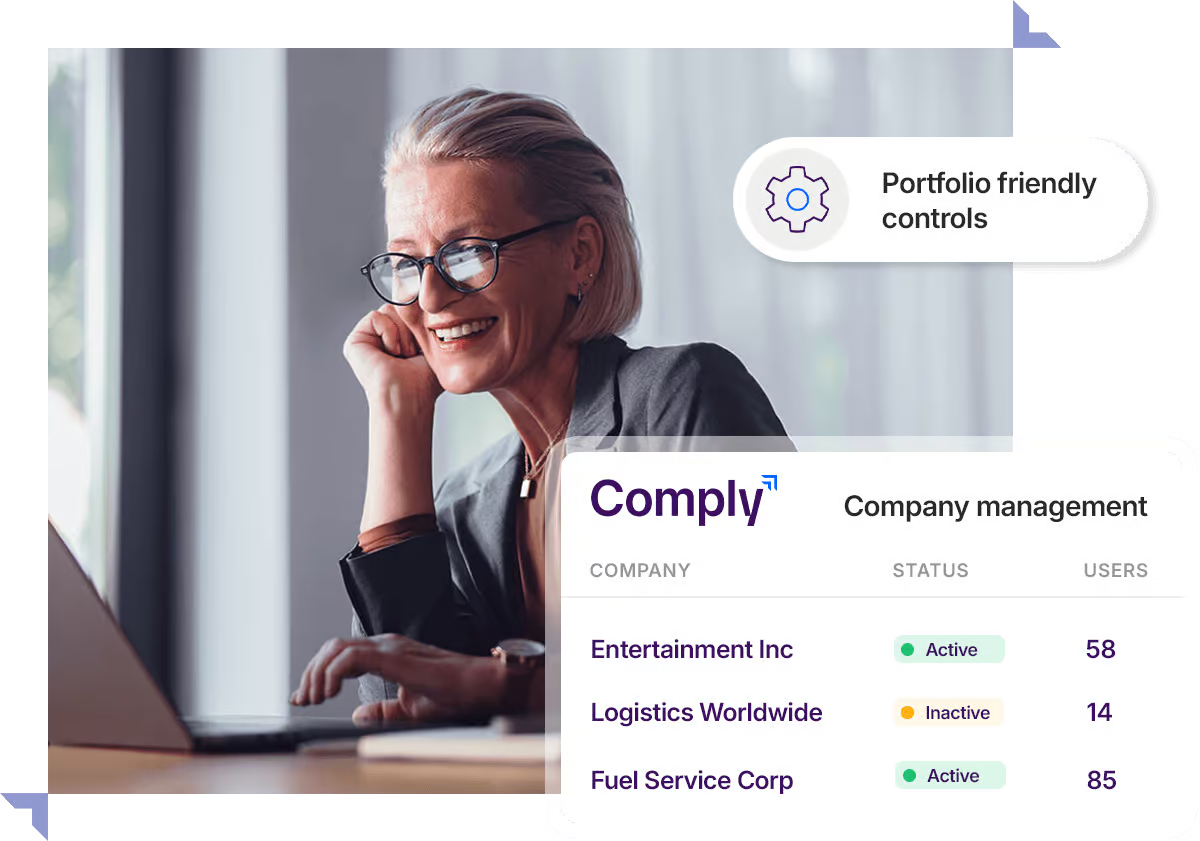
Portfolio-friendly controls
- Use the Scheduler and lifecycle roles to keep Data Due → Prepare → Review → Approve → Submit on track for each client and country.
Unified EU workflows
- Configure VAT, OSS, IOSS, VIES/EC Sales and Intrastat as return types with consistent preparation, validation and proof.
Audit ready, every period
- Box and transaction-level attachments, immutable logs and submission evidence reduce audit turnaround time.
Practice-first capabilities for multi-client indirect tax operations
Entity & jurisdiction setup

- Add client entities, VAT registrations and return types per country, including VAT, OSS, IOSS, VIES/EC Sales, Intrastat and Annual returns, plus VAT groups and submission types where applicable.
Why it matters: Bring new clients and countries online quickly without rebuilding processes for each regime.
Client data preparation & quality controls

- Create reusable templates to map client data from any source system, automatically transform values and apply firm-specific validation rules to standardise submissions and enforce internal quality standards.
Why it matters: Standardise data preparation across your client portfolio, reducing manual effort and spreadsheet rework.
Validation engine (300+ checks)

- Run over 300 standard and configurable validation checks covering data quality, tax logic and jurisdiction-specific requirements, with clear distinction between warnings and critical errors.
Why it matters: Identify issues before review and submission, improving filing accuracy across VAT, OSS, IOSS and VIES obligations.
Lifecycle roles, delegation & escalations

- Orchestrates Data Provider, Preparer, Reviewer, Approver, Submitter with client and staff role assignment, delegation windows, notifications and escalation triggers.
Why it matters: Clear ownership and reliable cover reduce bottlenecks and late submissions.
Audit packs – Scheduler & deadline control

- Sets internal dates for each stage per return (VAT, OSS, IOSS, VIES, Intrastat), with weekend and holiday logic and at‑risk indicators surfaced in dashboards.
Why it matters: Keeps dozens of client returns on time without inbox chasing.
Review, adjustments, submission & proof

- Edit numerical and non‑numerical boxes (with prior period and year comparisons), attach evidence, generate local files, submit (including API where available), store authority references and proofs, and manage self‑revisions post‑submission.
Why it matters: Creates a defensible audit pack and controlled correction path for every client and period.
eInvoice reconciliaiton

- Validate VAT return data against eInvoice records to identify discrepancies before returns are submitted on behalf of clients.
Why it matters: Reduces review effort, improves confidence in filings and provides additional assurance across multiple client engagements.
Dashboards & analytics
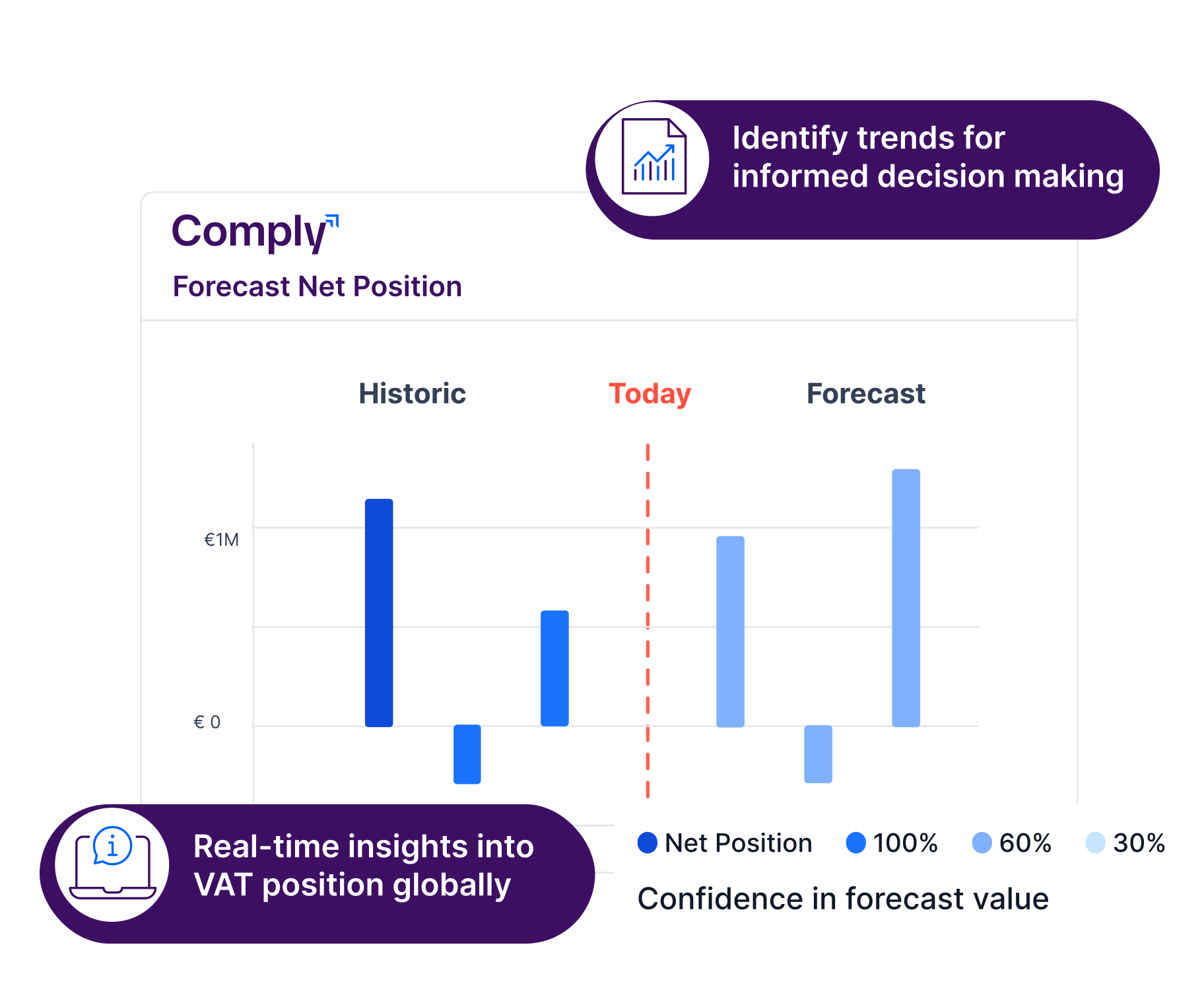
- Global Dashboard and analytics for statuses, at‑risk returns, on‑time versus late performance, trends, forecasts and AP/AR views, filterable by entity, jurisdiction and return type.
Why it matters: Prioritise work, evidence value to clients and forecast cash impacts from VAT payments/refunds.
INTEGRATIONS
Works with your existing systems
Comply is ERP‑agnostic and works with a wide range of accounting, billing and enterprise systems, including custom and multi‑system environments.


Built to adapt to every client, structure and filing requirement
Flexible pricing designed to support different client types, VAT group structures and filing volumes, so you can scale your services confidently without being constrained by your compliance solution.

Cutting-edge security
Your data. Protected at every level.
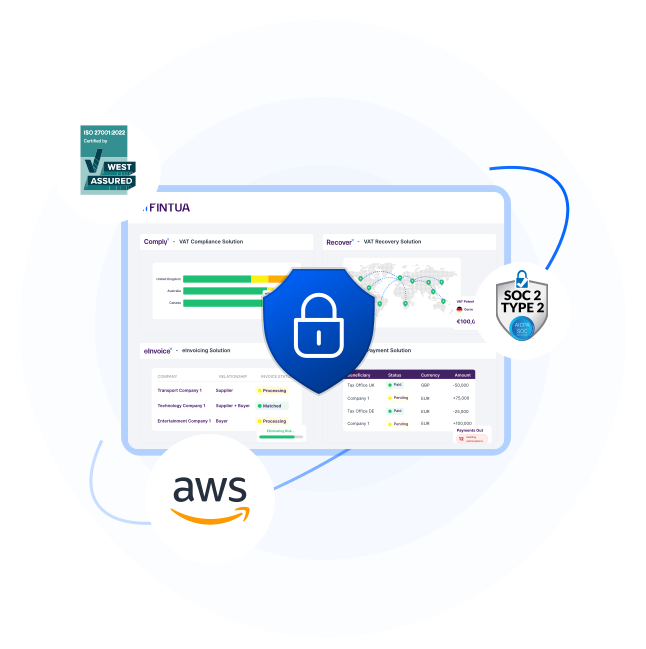
We use industry-standard TLS encryption, strict role-based access controls, and enterprise-grade infrastructure through trusted providers like AWS. Our ISO 27001 certified Information Security Management System certified and SOC 2 Type II compliance are backed by 24/7 monitoring, regular testing and robust incident response processes.
Uses Cases
Where Comply delivers
value for Accountancy Practices


New-client onboarding
Reuse templates/mappings to get the first period live fast

VAT group reporting
Manage VAT groups alongside individual entities, maintaining clear reporting, controls and auditability

Multi‑country filing cycles
Keep VAT, OSS/IOSS, VIES and Intrastat on one predictable schedule

Reviewer sign‑off
Apply lifecycle roles, attachments and comparisons to speed approvals
Audit support packs
Export proofs, logs and box‑level evidence in minutes

Post‑submission corrections
Use self‑revisions for amended and supplementary filings with full traceability
One Platform for Indirect Tax
Power your indirect tax operations with the full Fintua platform
Extend Comply with connected solutions that support eInvoicing, return filing, global payments and VAT recovery – all within one platform that works with your existing finance systems.

Stay mandate‑ready and aligned with Comply
- Stay compliant with evolving eInvoicing, eReporting and SAF‑T mandates through live regulatory updates
- Reconcile eInvoice data with Comply VAT returns for consistent, end‑to‑end reporting


Make compliant tax payments with confidence
- Send regulated tax payments globally in local currencies through a secure settlement network, with end‑to‑end tracking and full visibility
- Improve payment speed and efficiency, reduce costs and meet tax authority deadlines with confidence


Automate VAT recovery at scale
- Maximise VAT recovery across T&E and AP through intelligent automation that identifies and validates domestic and foreign VAT
- Connect seamlessly with ERPs, TMCs, hotel groups, corporate cards and more, with full oversight and real‑time reporting on reclaim activity


Customer stories
12,000+ customers control
their indirect taxes with Fintua








Effortless onboarding,
minimal disruption
Onboarding with Fintua is effortless and low-impact. We work side by side, providing hands-on guidance to get you live quickly and delivering value from day one.
After go-live, our dedicated support team provides fast, expert help through our Client Engagement Service Desk, with regular check-ins and progress updates.
“Extremely good communication and cooperation. Clear actions, great availability and flexibility, as well as transparency”
“Very straightforward process – new entities were added to scope seamlessly.”
“Communication, the availability of the team, the desire to succeed and do everything possible to make the client satisfied”

The OLD way
Traditional and
Big 4 solutions

The New way
VAT compliance
with Fintua
| Onboarding & Implementation | Slow, manual setup; lengthy onboarding; fragmented or custom builds | Rapid onboarding, turnkey integration, ready to scale |
| Provider Model | Multiple local agents or resource-heavy centralised teams; siloed systems | One unified platform for global VAT, eInvoicing, and payments |
| Process Automation | Manual preparation, filing, and payments; partial automation reliant on spreadsheets | End-to-end automation: prepare, validate, submit, pay |
| Regulatory Coverage | Struggles to keep up with evolving global digital tax reforms and einvoicing mandates | Real-time updates inline with global tax and einvoicing reforms |
| Error Reduction | High error rates, manual reviews, increased audit and penalty risk | Automated checks, configurable rules, and full audit trail |
| Data Accuracy & Visibility | Disparate data, limited oversight, delayed or fragmented reporting | Centralised dashboards, real-time analytics, and trend analysis |
| Payments Handling | Manual, cross-border payments are slow and costly | Integrated, automated cross-border tax payments in local currencies |
| Inbuilt eInvoicing | Separate providers or add-ons needed for eInvoicing; limited integration | Flexible, turnkey eInvoicing built-in to meet global mandates |
| Audit Readiness | Poor record-keeping, fragmented documentation, hard to track submissions | Historic, tamper-proof audit trail and instant access by entity |
| Cost & Value | High admin costs, premium pricing, hidden fees, and missed deadlines | Predictable, transparent pricing; reduced total cost |
| Scalability | Difficult and costly to expand across new markets or entities | Effortlessly scales with your business globally |
| Support & Flexibility | Inconsistent support, limited agility, or high-cost dedicated teams | Tiered support, configurable managed/self-service options |
| ROI & Business Impact | Compliance is a cost center, slows growth, and stretches resources | Compliance drives efficiency, supports global growth, and enables rapid expansion |
The Fintua Way simplifies VAT management by automating processes, enhancing visibility, and reducing manual effort, giving you more time to focus on strategic growth.
Speak with a COMPLY SPECIALIST
See how Comply supports your filing workflow
We’ll focus on your real‑world process – from data and review to approvals and audit evidence – no sales pitch, just a practical walkthrough of fit.
What you’ll get:
- 15-minute walkthrough tailored to your workflow
- High-level implementation and support outline
- 1-page follow-up with resources and recommendations
Without Fintua and their technology, we wouldn’t be where we are now. We have a bright future ahead of us, and their technology will get us there.

Pall Corporation
Frequently asked questions
-
How can we onboard new VAT clients quickly without rebuilding everything each time?
Use reusable templates, mapping configurations and transformation rules that can be cloned or adapted across similar clients.
-
How do we manage varying client approval processes across many jurisdictions?
Assign lifecycle roles to client or staff, use delegation windows and rely on the Scheduler and notifications to keep approvals on track.
-
Can Comply support all the EU return types we manage for clients?
Yes – VAT, OSS, IOSS, VIES/EC Sales, Intrastat and Annual return types are configurable per entity, with linked datasets where applicable.
-
How do we quickly respond to client audits or regulatory checks?
Comply maintains immutable audit logs, retains submission proofs and lets you attach documents at transaction or box level for fast evidence generation.
-
How do we correct returns if a client identifies an issue later?
Use Self‑Revisions to file amended or supplementary returns, depending on the country, with all changes tracked in audit history.
A solution for all business
Comply is built by tax professionals, for tax professionals, making global VAT compliance simpler across all industries.