
Pre-populated VAT returns expansion
More and more tax authorities across Europe are moving towards pre-populated VAT returns – returns that are automatically prepared by the authority using transaction-level data. This shift builds on existing eInvoicing mandates and further highlights why high-quality, accurate data is critical to the future of VAT. The aim of pre-populated VAT returns is to enhance efficiency, reduce manual errors and accelerate compliance.
Recent developments include:
- Hungary (January 2024): Introduced pre-populated VAT returns
- Romania (August 2024): Romanian authorities implemented eTVA authority populated VAT return, compiled based on the data available from different sources – eInvoicing platform, Control List, VIES , SAF-T. Sanctions are applicable in case of not providing timely explanations (within 20 days from the request date) in case of material discrepancies between the taxpayer reported and the authority calculated amounts.
- Portugal (July 2025): Portugal offers prepopulated VAT returns for a range of taxpayers
- Slovenia (July 2025): Slovenia introduced pre-populated VAT returns where the newly introduced Control List is submitted three days before the VAT return deadline.
From concept to the practical implementation
The name ‘pre-populated’, ‘pre-filled’ suggests a streamlined, automated return preparation. In practice, it often means the burden shifts earlier in the reporting cycle and to a much larger scale. To transaction-level accuracy, data quality and system integration.
Compliance now requires:
- Continuous monitoring at transaction level to ensure accuracy
- Data reconciliation across multiple systems (ERP, invoicing, accounting)
- Alignment with local formats and cross-border reporting requirements
Common challenges businesses face
The situation is even more challenging where the business is a non-established company with occasional operations and exposure to country-specific invoicing and accounting requirements.
Examples of issues encountered in practice:
- Data collection and accessibility
- Authorities require detailed information for transaction level reporting not previously reported e.g. customer name, address.
- Extracting data often needs IT support, and B2C data raises confidentiality concerns.
- Data alignment
- Information may sit across multiple reporting systems e.g. ERP divisions, eInvoicing platforms, cross-border transactions or import VAT systems – requiring careful reconciliation to ensure valid, correct and exhaustive reporting.
- Data quality
- Each transaction effectively becomes a “mini VAT return” which contain the supplier details – counterparties, goods or services descriptions – and applicable tax treatment – tax code, tax breakdown, grounds for imposing or not imposing, tax point date.
- Errors or missing details can block submissions or trigger audits.
- Reconciliation with authority data
- Discrepancies between taxpayer data and authority records ( e.g. from eInvoicing platform, Control List/ SAF-T, VIES) must be explained, often under strict deadlines. Romania’s eTVA is a clear example, requiring responses within 20 days.
How businesses can prepare for pre-population
Data is the key to successful pre-population. To adapt to these regulations, businesses need to ensure transaction-level data is accurate, accessible and integrated into their VAT compliance processes. By integrating the VAT reporting system with any of the systems that contain the newly required transaction-level data.
For businesses operating in a single country this would mean a one-off setup effort and ongoing monitoring of the developments within the set of other tax obligations. However, for businesses operating cross-border, the challenge is much greater. Keep pace with evolving digital reporting requirements across an increasing number of jurisdictions means allocating significant resources and undertaking significant compliance risks.
A sustainable process flow that would ensure compliance at a minimum cost should include:
- A buffer system to collect and validate transaction-level data in real time
- Validation checks on completeness, correctness and consistency e.g. valid VAT numbers, tax codes and reporting periods
- Automated report generation to produce both transaction-level reports (SAF-T, Control List) and traditional VAT returns depending on jurisdiction
How Fintua helps
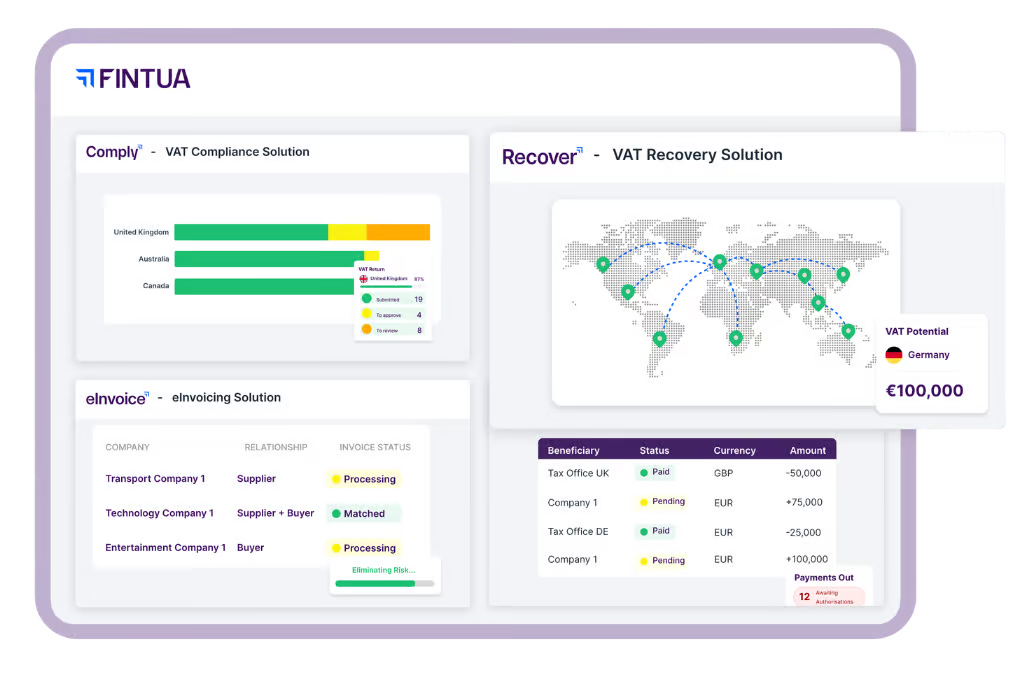
Comply by Fintua is designed to bridge this gap. It acts as a buffer system with the capacity to receive and process transaction-level data with built-in validations and reconciliations.
- Self-service or managed service options available
- End-to-end coverage from transactional-level checks to final VAT return preparation
- Future-proof compliance, ready for both current and upcoming digital reporting mandates.
The direction is clear: VAT reporting is becoming real-time and data-driven. The question is not if but when your business will need to comply.
Work with indirect tax experts
Navigating global indirect tax doesn’t have to be complicated. At Fintua, our dedicated team brings clarity to compliance. Whether you’re expanding into new markets or streamlining existing obligations. We combine expert insight with tailored technology to support businesses in a digital-first landscape. Whatever the jurisdiction, whatever the challenge – we’re ready.
Subscribe to our newsletter
Stay informed about the latest VAT news, trends and topics from around the globe with our monthly newsletter. Each month, we deliver insightful updates straight to your inbox, helping you stay ahead of the curve.
Authors


Darina Ivanova
Darina leads Fintua’s Tax R&D function. She has more than 20 years of experience in VAT and indirect taxes, gained across multiple areas – compliance and recovery, tax determination, consultancy and appeals. Over the course of her career, she has supported clients of all sizes – SMEs, large enterprises, and multinationals – across diverse business sectors on VAT matters on local, regional, and global level. Within the Tax R&D function, Darina ensures Fintua’s products and processes evolve sustainably in line with the dynamically changing tax landscape.