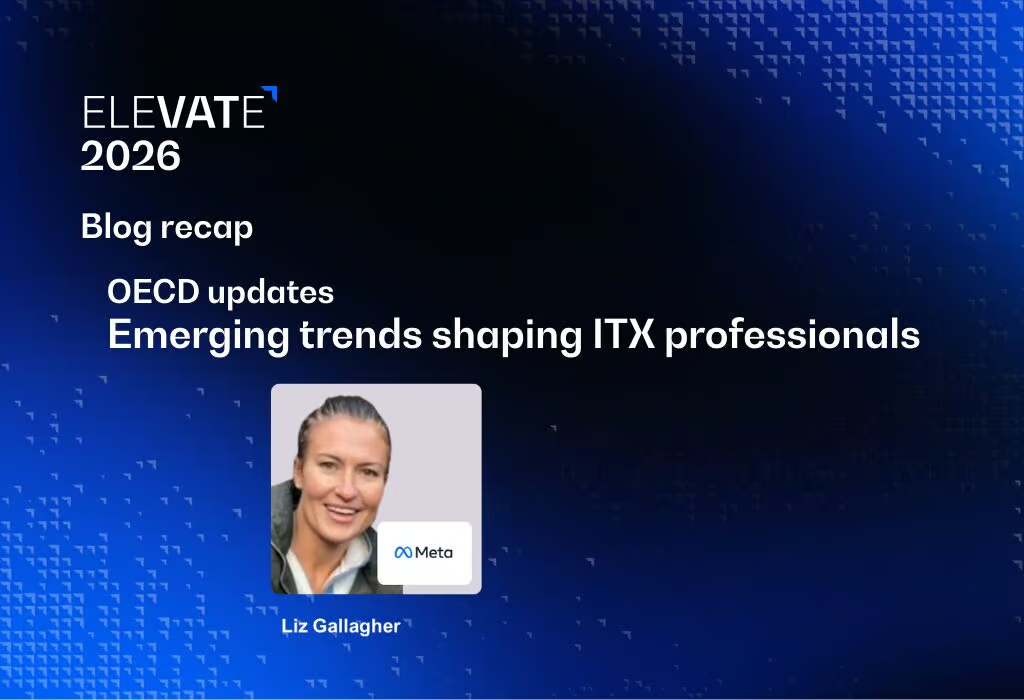

At ELEVATE 2026, Liz Gallagher, EMEA Indirect Tax Lead at Meta, shared firsthand insights from her recent experiences with the OECD, highlighting how global indirect tax (ITX) is evolving and what this means for tax professionals worldwide. With over eight years of experience representing business perspectives at the OECD, Liz provided a unique view on how companies and tax authorities are navigating the evolving landscape of digital reporting, eInvoicing and AI adoption.
The Organisation for Economic Co-operation and Development (OECD) is an intergovernmental forum of 38, mostly high-income, nations dedicated to promoting better policies for economic growth, prosperity and sustainable development. It functions as a data-driven knowledge hub providing policy analysis, standards and research to tackle global challenges in education, finance and trade.
The age of real-time, data-driven tax administration
The central takeaway? The era of real-time, data-driven administration is here. OECD’s global forum, held every 4 years, showcased responses from over 100 tax authorities and 300 delegates worldwide. It highlighted a universal trend: eInvoicing and digital reporting are reshaping compliance across jurisdictions far beyond the EU. These trends are actively influencing the rollout of eInvoicing and B2C digital services regimes in countries like Belgium, Poland, Denmark and France.
Liz emphasised that collaboration between businesses and tax authorities is critical, reflecting a shift toward more transparent, constructive engagement in tax administration.
“If we work better together, maybe it’ll work better for all of us” .
Key focus areas from the OECD
1. eInvoicing and digital reporting
The number one focus area across the world was the matter of eInvoicing and digital reporting. Across regions, from Africa to Latin America, eInvoicing and digital reporting remain top priorities. Latin America has largely completed its digital reporting journey, while regions like the UAE are expanding eInvoicing to non-resident entities. Liz highlighted the importance of consistent, practical implementation to avoid unnecessary burdens on multinational businesses.
2. B2C and e-commerce
E-commerce compliance continues to dominate global tax priorities. Basic B2C digital services are now widely regulated, with companies like Meta managing reporting in 86 countries. Beyond traditional B2C, emerging areas include deemed suppliers and low-value goods regimes, where countries are exploring scalable models for cross-border e-commerce tax collection.
Liz stressed that collaboration with authorities is key: ensuring systems are ready, portals are in place and realistic timelines (often 6-12 months) are provided to implement these regimes effectively.
3. Digital Continuous Transactional Reporting (DCTR)
Liz participates in OECD working groups developing the DCTR toolkit, designed to help countries transition thoughtfully to eInvoicing. The OECD’s goal is guidance, not mandates, ensuring systems are secure, interoperable and scalable. A measured, multi-year approach helps both authorities and businesses adopt new regimes successfully. Liz shared examples where dialogue between business and tax authorities led to successful, phased implementations, demonstrating the benefits of collaborative approaches.
4. AI in tax administration
AI is gaining traction among tax authorities, especially in APAC, to identify non-compliant taxpayers. Liz stressed that AI is a complement, not a replacement: human expertise remains essential, particularly for complex compliance and interpretation. At Meta, AI is already accelerating tasks like return preparation and dashboard creation, but oversight and human judgment remain critical.
6 Pillars for successful eInvoicing
Liz highlighted six key pillars for eInvoicing success, emphasising both usability and security:
- Clear strategy: Define objectives and the format for digital invoices
- Technical specifications: Ensure systems are designed for straightforward compliance
- Ironclad security: Protect sensitive data, with GDPR-level standards as a baseline
- Interoperability: Promote systems like Peppol for cross-border alignment
- Long-term sustainability: Maintain robust processes for updates and maintenance
- Stakeholder collaboration: Engage with tax authorities early and throughout implementation
Through these pillars, companies can create consistent playbooks across multiple countries, simplifying compliance while minimising risk.
Lessons for ITX professionals
Liz shared practical approaches from Meta’s global indirect tax team:
- Small, focused teams: Lean project teams in AR and AP manage compliance efficiently while maintaining quality.
- Collaboration is key: Engage with tax authorities early to shape practical, workable regimes.
- Human expertise remains central with AI: AI accelerates processes, but complex judgments require experienced professionals.
- Prepare for a global “tsunami” of change: Digital reporting initiatives are coming worldwide; proactive planning is essential.
- Data readiness: For full automation, complete data sets are essential; without them, AI can’t deliver fully touchless solutions yet.
Looking Ahead
Liz concluded with a call to embrace technology while balancing realism:
“The machine is not replacing you – it is helping us do our jobs better.”
For ITX professionals, staying engaged with emerging trends, understanding the nuances of digital reporting and maintaining a human-in-the-loop approach are critical to success.
Liz’s advice: Experiment, learn and build systems that are scalable, secure and compliant – while remembering that human expertise remains irreplaceable.
Watch on-demand
Authors


Liz Gallagher
Liz Gallagher is a seasoned Indirect Tax Executive and leads Meta’s EMEA Indirect Tax Team, guiding strategy, compliance, and audit across the region. Liz supports compliance in over 80 countries and drives transformation through automation and AI, streamlining tax processes and enabling business growth. She also partners across Meta to support new product launches, infrastructure expansion, and policy advocacy, ensuring Meta remains compliant and future-ready in the digital economy.
Liz is also an active member of Business@OECD, contributing to international tax policy discussions.
Before joining Meta, Liz spent 15 years at PwC Ireland. Liz lives in Ireland with her family and their English Sheepdog, Simba.



Helen Long
As Fintua’s Content Marketing Manager, Helen creates content that helps tax and finance professionals stay informed of the ever-changing world of VAT.