
At ELEVATE 2026, one message came through loud and clear: VAT automation is no longer optional.
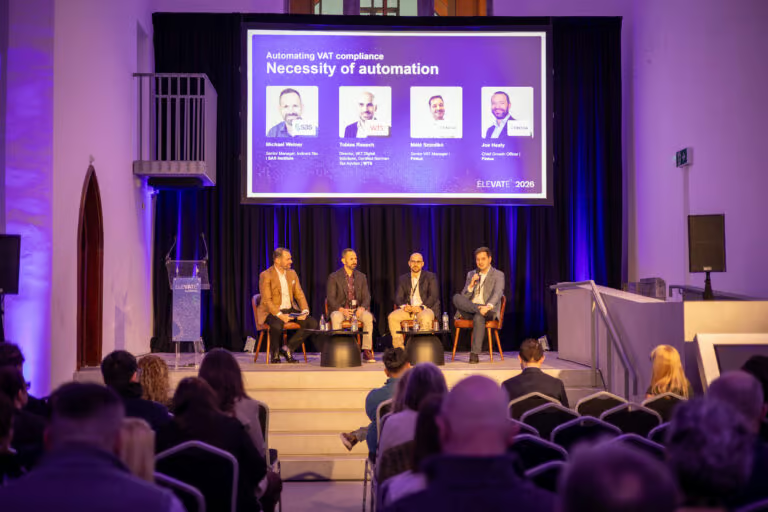
In this session, Automating VAT compliance – Necessity of VAT automation, industry experts Michael Welner (SAS Institute), Tobias Rausch (WTS), and Máté Szimilko (Fintua) shared practical insights from the front lines of global VAT compliance.
From messy data and manual processes to co-sourcing and AI readiness, the discussion mapped out what automation really looks like in practice and why businesses can’t afford to delay.
Why VAT automation is no longer optional
For many organisations, automation starts as a response to complexity. As Michael Welner, SAS, explained, global expansion often exposes inconsistencies:
- Multiple ERP systems
- Fragmented processes across entities
- Lack of standardisation
For SAS, moving to a single global ERP system was the catalyst. But the real driver went beyond technology:
“When we talk about automation, we’re not just talking about technology upgrades. It’s changing the way we do business and the way we operate globally. It brings consistency, it standardises how transactions are captured, validated and evidenced, which in turn leads to better VAT compliance.”
Layer on increasing regulatory pressure, especially around digital reporting, and the shift becomes unavoidable.
Key takeaway:
Automation isn’t just a tech upgrade. It’s a foundational step toward scalable, compliant global operations.
From manual effort to meaningful work
Both Tobias and Máté reflected on a familiar starting point: spreadsheets, copy-paste and repetitive manual work. It’s a reality many tax professionals still face. But that model is quickly becoming outdated.
- Manual work is inefficient
- Clients won’t pay for it
- It limits the value tax teams can deliver
Automation changes that dynamic. Instead of spending time processing data, teams can focus on:
- Interpreting complex VAT rules
- Reviewing transactions
- Providing strategic input
“The role shifts from data processing to tax evaluation – that’s the main value add as a tax provider you can provide.”
Key takeaway:
Automation doesn’t replace tax professionals, it elevates them.
The evolving role of the tax function
As automation increases, the role of indirect tax teams is expanding in two key ways:
1. From operators to analysts:
Tax professionals are no longer just preparing returns – they’re validating, analysing and advising.
2. From users to collaborators:
Teams must now work closely with IT and systems teams to:
- Shape data structures
- Define requirements
- Ensure accurate outputs
This shift is critical in an environment where eInvoicing, real-time reporting and ViDA are reshaping compliance expectations.
Key takeaway:
Tax is becoming both a strategic and technical function.
Data is the foundation of successful automation
One theme came up repeatedly: automation is only as good as your data. Poor data quality leads to poor outcomes – no matter how advanced the technology.
Common challenges include:
- Missing VAT IDs
- Incomplete fields
- Inconsistent formats
- Fragmented data sources
Or as Tobias put it:
“Garbage in, garbage out.”
The reality is fixing data isn’t always straightforward. While the ideal approach is to fix issues at source, Máté highlighted a more practical reality:
- Tax teams often don’t control master data
- Changes can take months (or years)
So what’s the work around?
- Identify recurring issues (often ~80%)
- Apply automated rules and logic
- Bridge gaps until source data is improved
Key takeaways:
Perfect data isn’t required to start but understanding and managing data gaps is essential.
Co-sourcing: Scaling expertise and efficiency
Another major theme of the session was the role of co-sourcing in modern end-to-end VAT compliance.
For global organisations, it offers:
- Consolidation under one provider
- Access to local expertise
- Improved visibility across jurisdictions
- Increased efficiency and scalability
As Michael noted:
“We don’t have the ability to learn every VAT rule in every country around the world – co-sourcing fills that gap.”
Tobias added that co-sourcing acts as a multiplier, especially for under-resources tax teams juggling multiple responsibilities. It also enables:
- Better integration with internal processes
- Reduced manual communication
- Streamlined workflows
Key takeaway:
Co-sourcing is a strategic extension of the tax function, not just for support.
Practical advice: How to start your automation journey?
So where should businesses begin?
Michael outlined a clear, structured approach:
1. Stabilise
- Fix data issues
- Map processes
- Ensure accuracy
2. Standardise
- Define minimum VAT data requirements
- Align reporting structures
3. Automate
- Focus on predictable, repeatable processes first
- Start with pilot countries or use cases
4. Optimise
- Continuously refine as regulations and systems evolve
Don’t underestimate change management
Tobias highlighted a critical and often overlooked factor: people. Automation requires buy-in from the teams doing the work.
- Change can be uncomfortable
- Processes are hard to let go
- Communication is essential
Key takeaway:
Máté reinforced that AI is coming to our job rather than for our job and offered a pragmatic approach:
- 80% of processes can often be automated with 20% of effort
- The remaining complexity can be tackled over time or with partners
Final thought: Just get started
The session closed with a simple but powerful message: Start now.
Whether it’s:
- Reviewing your data
- Running a pilot on a few countries you’re struggling with
- Exploring automation tools
- Engaging a co-sourcing partner
With eInvoicing mandates, ViDA and real-time reporting on the rise, automation is quickly moving from optional to essential. It’s vital that we move to being proactive rather than reactive and starting early is key.
Watch on-demand
Ready to move from manual to automated VAT compliance?
At Fintua, we help businesses bridge the gap between fragmented data and fully automated compliance, without waiting for perfect conditions.
If you’re still relying on spreadsheets, now is the time to take the first step.
Authors


Michael Welner
Michael Welner, CPA, serves as Senior Manager of Indirect Tax at SAS. With more than 20 years in both industry and public accounting, his expertise spans Federal, State and Local, and International tax. As SAS’s tax global process owner for financial systems, Michael oversees global invoicing and tax reporting, ensuring robust controls, high‑quality data, and audit‑ready compliance across complex landscapes. A trusted advisor to business and finance leaders, he has guided cross‑functional teams through VAT, sales and use tax, and income tax initiatives in diverse jurisdictions—translating evolving regulatory requirements into scalable, repeatable processes.
Michael is passionate about harnessing technology to streamline intricate tax operations. He is dedicated to modernising workflows, automating tax determinations, simplifying filings, and leveraging data to achieve reliable compliance results. A champion of practical, risk-aware automation, Michael balances strong governance with operational efficiency and is deeply committed to advancing innovation in global tax compliance.



Tobias Rausch
Tobias Rausch is a Director for VAT Digital Solutions at WTS and a certified German Tax Advisor (Steuerberater) with over 14 years of experience in the tax and audit sectors. He is focused on the end-to-end digitalisation and implementation of robust VAT processes.
Tobias specialises in bridging the gap between tax legislation and technological implementation. Having recently implemented digital workflows that reduced VAT processing time and eliminated manual interaction, he leverages the WTS Global Partner Network to manage complex mandates across Europe and beyond. His expertise includes the conceptual design of Analytics and the deployment of global VAT compliance solutions.

Máté Szimilkó
With a decade of experience in VAT compliance across both Big 4 firms and technology-driven service providers, Máté has progressed from preparer to manager, gaining deep insights into the sector’s challenges and opportunities. He consistently views complexity as a chance to improve quality and efficiency, leading projects and driving continuous advancement at Fintua in all aspects of VAT compliance, from sales discussions to return preparation and notifications.


Helen Long
As Fintua’s Content Marketing Manager, Helen creates content that helps tax and finance professionals stay informed of the ever-changing world of VAT.