
As businesses settle into 2026, attention is focused on what’s next: new VAT rules, increased scrutiny from tax authorities and expanding eInvoicing mandates across Europe and beyond.
But while teams look ahead, there’s a significant opportunity at risk of being overlooked, recovering the VAT already incurred in 2025.
For many organisations, VAT recovery is still treated as a low priority, administrative task. The reality is very different, across Europe millions in recoverable VAT is written off every year, not because businesses aren’t entitled to reclaim it, but because deadlines pass, ownership is unclear and recovery processes remain fragmented.
In 2026, VAT recovery isn’t just a compliance exercise. It’s a cash flow opportunity and one that becomes harder to unlock the longer it’s left.
Why VAT recovery gets overlooked
VAT recovery continues to be an area where value quietly leaks out of the business. Rules differ by country, expense type and industry, and those rules continue to evolve. When VAT recovery is managed across multiple teams, systems and spreadsheets, consistency quickly breaks down, even in well-resourced finance and tax functions.
Common reasons businesses miss recoverable VAT include:
- Limited visibility into where and how VAT is being incurred
- Complex and inconsistent local rules across jurisdictions
- Manual, spreadsheet-driven processes that are time consuming and prone to error
- Missed foreign VAT deadlines
- Uncertainty around eligibility, leading to conservative (or no) claims
- Fragmented responsibility, with VAT recovery sitting between tax, finance and AP teams
Over time, these issues compound and small amounts written off each month can quickly add up to material cash leakage, particularly for international businesses with high transaction volumes.
Why you should prioritise VAT recovery in 2026
In most cases, VAT can be reclaimed retrospectively, typically domestic VAT within a 4 to 5 year window and there is a 1 year window for foreign VAT. That means VAT incurred in 2025 is still recoverable today, but only if it’s identified, validated and submitted on time. This makes 2026 a critical year to act.
Recovering VAT from 2025 often represents the highest-value, lowest-effort opportunity. The data is recent, documentation is easier to retrieve, and eligibility is clearer compared to older periods where systems may have changed or records may be incomplete.
For businesses operating internationally, 2025 spend may include recoverable VAT on:
- Business travel expenses (hotel stays, transportation, meals)
- Supplier invoices for goods and services
- Conferences, training, trade shows and event expenses
- Professional and consultancy fees
- Advertising & marketing expenses (campaign costs, agency fees, digital media spend)
- Tooling & equipment costs (machinery, industrial tools, manufacturing supplies)
If this VAT hasn’t been reviewed, validated and submitted correctly, it could already be slipping through the cracks.
VAT recovery can help fund compliance costs
VAT recovery from 2025 can often cover the expenses associated with implementing a VAT compliance process. By reclaiming VAT efficiently, businesses can generate cash that be reinvested into technology needed for ongoing VAT compliance, effectively making your VAT compliance solution self-funding. This helps creates a cycle in that the more you optimise recovery , the more resources become available to strengthen compliance, reduce risk and improve overall financial control.
What can affect VAT recovery
Even where businesses intend to recover VAT, claims often fall apart in practice.
Common recovery gaps include:
- Missed foreign VAT claims: Cross-border VAT recovery remains one of the most overlooked areas, often due to uncertainty around eligibility or lack of local knowledge
- Errors in domestic VAT reclaim: Non-compliant or ineligible deductions, and missed claims on eligible VAT, all leading to reduced recovery.
- Incomplete or non-compliant invoices: Even where VAT is identified, missing data, incorrect formatting or inconsistent documentation leads to rejected or abandoned claims
- Missed deadlines: Manual processes and unclear ownership mean claims aren’t prepared or submitted in time, turning recoverable VAT into a sunk cost
- Conservative claiming: Increased scrutiny from tax authorities leads many businesses to claim less than they are entitled to, rather than risk errors or audits
Why delaying VAT recovery increases risk
The longer VAT recovery is delayed, the harder it becomes.
As time passes:
- Deadlines approach or expire
- Supporting documentation becomes more difficult to retrieve
- Manual review efforts increase
- Recovery becomes more resource-intensive and disruptive
What could be a straightforward review today can quickly turn into a complex remediation exercise later. In 2026, acting early on 2025 VAT reduces both effort and risk.
What effective VAT recovery looks like in 2026
Recovering VAT doesn’t have to be manual, reactive or resource-heavy.
Leading finance and tax teams take a more structured, technology-enabled approach that focuses on:
- Full visibility of spend: Understanding where VAT was incurred, across which jurisdictions, and whether it’s eligible for recovery.
- Invoice validation against local rules: Ensuring documentation meets country-specific requirements to reduce rejections.
- Centralised claim tracking : Monitoring submission status, deadlines and repayments across multiple tax authorities.
- Standardised processes: Replacing ad-hoc spreadsheets and email trails with automated solutions and controlled, repeatable workflows.
This approach not only maximises recovery value but also reduces administrative burden and audit risk.
How Fintua helps you unlock VAT in 2026
For many businesses, achieving this level of control is difficult with manual processes alone.
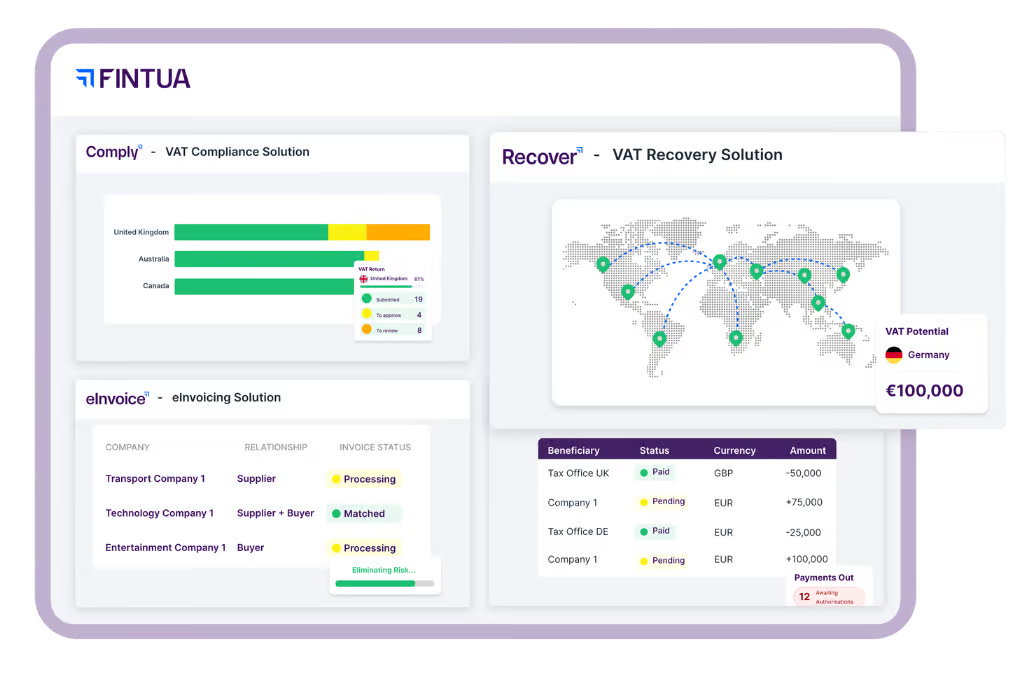
Fintua helps organisations turn VAT recovery from a reactive task into a controlled, value-driven process.
With Fintua, you can:
- Identify recoverable VAT from 2025 spend across jurisdictions
- Automate invoice validation and eligibility checks
- Submit accurate, compliant claims on time
- Track recovery progress and repayments in one place
- Reduce risk while maximising recovery value
- Cover the cost of VAT compliance with VAT recovery
The result is greater visibility, improved confidence in compliance, and faster access to cash you’re already entitled to.
Get a complimentary VAT recovery analysis
If you’re unsure whether your business is maximising VAT recovery, or want clarity on opportunities still available from 2025, Fintua can help.
Our complimentary VAT recovery analysis identifies missed recovery opportunities quickly and accurately, giving you clear insight into what can still be reclaimed and where to focus next. We integrate with all Expense Management Systems so there is no IT implementation required.
Get your complimentary VAT recovery analysis today and ensure you’re not leaving money on the table in 2026.
Subscribe to our newsletter
Stay informed about the latest VAT news, trends and topics from around the globe with our monthly newsletter. Each month, we deliver insightful updates straight to your inbox, helping you stay ahead of the curve.
Authors


Helen Long
As Fintua’s Content Marketing Manager, Helen creates content that helps tax and finance professionals stay informed of the ever-changing world of VAT.