Germany VAT guide
Germany’s VAT, known locally as Mehrwertsteuer (MwSt.) or Umsatzsteuer (USt.), was first introduced on 1 January 1968.
Germany’s VAT rules are derived from EU VAT directives, ensuring its national legislation, codified in the Umsatzsteuergesetz (UStG), is aligned with the broader EU VAT system.
Recent updates:
- Germany is introducing mandatory eInvoicing for domestic B2B transactions, with a phased rollout from 2025-2028. Businesses must be able to receive eInvoices from January 2025, with mandatory issuance phased in from 2027 and full implementation by 2028. Non-established businesses are generally outside the scope of the mandate.
Menu
What is the VAT rate in Germany?
19%
Standard rate: 19%
Reduced rate: 7%
Zero rate: 0%
Applies to exports and intracommunity supplies (with input VAT recovery)
Exempt categories: Activities in the public interest, such as health and education, as well as certain sectors including financial and insurance services

VAT registration in Germany
VAT registration in Germany depends on the business’s establishment status. While domestic businesses may benefit from a small business exemption, non-resident businesses are generally required to register from their first taxable supply.
Resident businesses
A German-established entrepreneur may benefit from the Small Business Regulation if both of the following apply:
- Their total turnover in the previous calendar year did not exceed €25,000
- Their expected turnover in the current year does not exceed €100,000
If a business exceeds either threshold, the business can no longer apply the exemption and must charge VAT under the standard regime.
Non-established businesses:
- EU Businesses: Must register for VAT in Germany from their first taxable supply unless they opt to use the One Stop Shop (OSS) scheme where applicable.
- Distance sales: Registration is not required where the supplier is established in only one EU Member State and total cross-border B2C sales of goods and services remain below the EU-wide threshold of €10,000. Below this threshold, VAT is generally due in the supplier’s country. Once exceeded, VAT is due in the country of destination (e.g. Germany), although suppliers may opt into the OSS scheme before reaching the threshold.
- Non-EU businesses: Must register for VAT regardless of turnover when making taxable supplies in Germany. They may simplify their reporting obligations by using the OSS or IOSS scheme where applicable.
Processing registration
VAT registration typically takes four to six weeks. Business receives a tax number and a separate VAT identification number is issued for intra-Community transactions.
eInvoicing requirements
Germany is introducing mandatory eInvoicing for domestic Business-to-Business (B2B) transactions, rolling out in three key phases.
Key dates to note:
- 1 January 2025: All domestic businesses must be able to receive structured eInvoices
- 1 January 2027: Businesses with an annual turnover exceeding €800,000 in the previous calendar year must issue structured eInvoices
- 1 January 2028: The requirement to issue eInvoices extends to all remaining medium, small and micro enterprises
Comply – Global VAT compliance
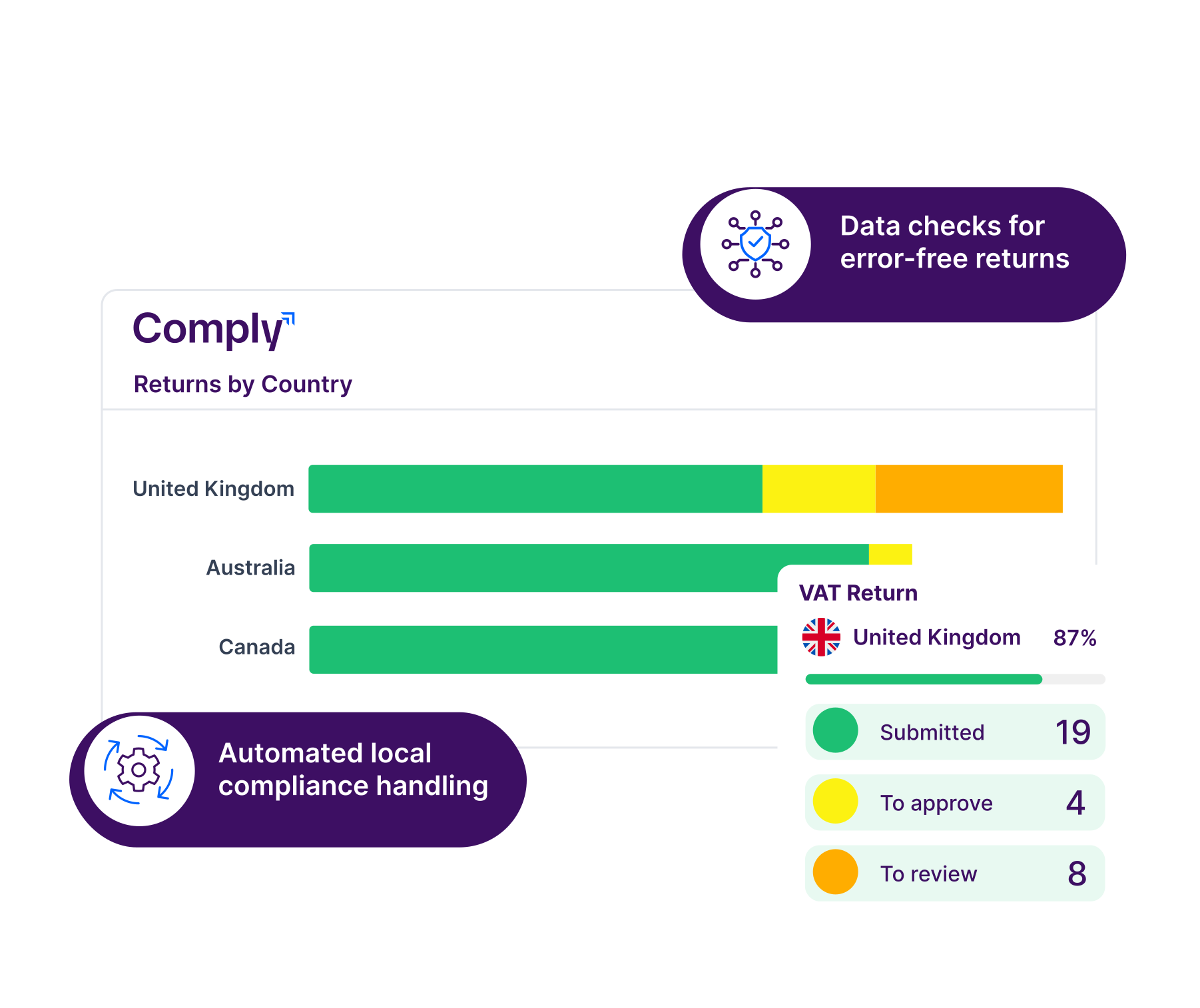
Our VAT compliance solution, Comply helps companies manage their complex, country-specific tax requirements including Germany’s Mehrwertsteuer (MwSt.)obligations.
Using AI and machine learning, our technology puts your VAT data through over 300 automated VAT rules, checking for errors, and preparing VAT returns for approval and submission. Comply provides a full audit trail for the German Tax Authorities.
VAT return filing and deadlines
Businesses in Germany must submit an annual VAT return. In most cases, they must also file preliminary VAT returns on either a monthly or quarterly basis.
The frequency for filing preliminary VAT returns depends on the total VAT liability from the previous calendar year:
- If the VAT liability exceeded €9,000, monthly preliminary VAT returns must be filed.
- If the VAT liability was between €2,000 and €9,000, quarterly preliminary VAT returns must be filed
- If the VAT liability did not exceed €2,000, the tax office may grant an exemption from filing preliminary VAT returns.
- If the taxpayer had a VAT refund/ input tax surplus of more than €9,000 in the previous calendar year, they may elect to file monthly preliminary VAT returns instead of quarterly ones.
Filing Deadlines
Preliminary VAT returns (monthly or quarterly):
These must be submitted electronically no later than the 10th day of the month following the reporting period. Businesses can request a permanent one-month extension.
Annual VAT returns:
If filed directly by the business, the return must generally be submitted by 31 July of the year following the reporting period. A later deadline may apply where the return is filed by a certified tax advisor.
VAT penalties
Failing to meet VAT deadlines in Germany can lead to two main types of penalties:
- Late payment surcharge: If the tax isn’t paid by the due date, a late payment surcharge becomes due automatically. This surcharge is calculated at 1% of the outstanding tax amount for each commenced month of delay. The outstanding amount is first rounded down to the nearest amount divisible by €50. A short grace period of up to three days may apply in certain cases.
- Late filing penalty: A late-filing penalty may be imposed if a tax return is not filed, or not filed on time. The penalty is 0.25% of the assessed tax for each commenced month of delay, with a minimum charge of €10 per month and a maximum of €25,000.

Fiscal representatives
Fiscal representatives are not mandatory in Germany. Both EU and non-EU businesses can register for VAT and fulfil their obligations directly with the German tax authorities.
However, businesses may choose to appoint a local tax advisor or VAT agent to assist with compliance and reporting requirements.
VIES declarations
In Germany, the VAT Information Exchange System (VIES) declaration, also known as the EC Sales List (ESL), must be submitted electronically by the 25th day after the end of the reporting period. The filing frequency is generally quarterly or monthly, with annual submission permitted only in exceptional circumstances.
Intrastat
Registration and submission
Businesses must submit Intrastat reports when movements of goods within the EU exceed specified thresholds.
Intrastat Thresholds
German applies separate thresholds for arrivals and dispatches:
Intrastat Arrivals: €3,000,000
Intrastat Dispatches: €1,000,000
Deadlines and frequency
Intrastat declarations in Germany are generally submitted monthly once the relevant threshold is exceeded. Declarations must be filed with the Federal Statistical Office (Statistisches Bundesamt) no later than the 10th working day following the end of the reporting month.
Rise Above the Rest
Maximise your potential with our full suite

VAT compliance solution
Rise above complex indirect tax challenges with Comply, Fintua’s revolutionary platform for global indirect tax compliance.

VAT recovery solution
Recover automates the process of identifying and reclaiming VAT on business expenses, both domestically and internationally, helping you boost your bottom line.

Integrated payments solution
Pay simplifies international payments, reducing complexity and costs while ensuring compliance with local regulations and improving financial visibility.

eInvoicing solution
eInvoice enhances efficiency by digitising your einvoicing process, ensuring compliance across multiple jurisdictions and improving cash flow management.