Greece VAT guide
In Greece, the local name for VAT is Fóros Prastithémenes Axías (Φόρος Προστιθέμενης Αξίας) or FPA (ΦΠΑ).
VAT was introduced in January 1987 and is administered by the Greek Ministry of Finance, through the Independent Authority for Public Revenue (AADE).
Recent updates:
- Greece is introducing mandatory B2B eInvoicing via the myDATA platform, with phased implementation beginning in March 2026 for large businesses and extending to all businesses from October 2026.
Menu
What is the VAT rate in Greece?
24%
Reduced rate: 13%
Applies to food, water supply, certain baby products, some medical equipment, hotel accommodation, passenger transport and restaurant services.
Reduced rate: 6%
Applies to medicine, books, newspapers and magazines, admission to cultural events such as theatres and cinema.
0% rate
Applies to exports and intracommunity supplies
Exempt categories: Activities in the public interest such as health and education, as well as certain services including financial and insurance services.

VAT registration in Greece
Resident businesses
Greek VAT law includes a simplification measure for small businesses with low turnover. If annual turnover does not exceed €10,000, businesses may opt for the small enterprise scheme, under which they do not charge VAT and have simplified VAT obligations.
Non-established businesses
EU businesses:
Non-established businesses from other EU Member States must register for VAT in Greece when the applicable thresholds are exceeded.
- EU wide threshold: €10,000
EU businesses making cross-border B2C are not required to register in Greece if their total EU-wide distance sales remain below €10,000 annually.
Non-EU businesses:
Non-EU businesses must register for Greek VAT from the first taxable supply, regardless of turnover. Where eligible, the may opt to use the One-Stop Shop scheme for reporting certain cross-border B2C supplies within the EU.
VAT penalties
Late submission of a VAT return in Greece triggers fixed administrative fines, based on the type of accounting records kept:
- €100 – Individuals or taxpayers not carrying out business activities
- €250 – Taxpayers keeping simplified (single-entry) accounting records
- €500 – Taxpayers keeping full (double-entry) accounting records
Late payment interest may also apply, typically at approximately 0.73% per month on outstanding VAT.
Fiscal representative
Non EU businesses are required to appoint a local fiscal representative when registering for VAT in Greece.

eInvoicing requirements
Greece is introducing mandatory eInvoicing via the myDATA platform for certain transactions. The rollout is phased in 2026 based on company size.
The mandate applies entities subject to Greek accounting standards and covers:
- Domestic B2B transactions
- B2B exports to non-EU countries
For intra-EU B2B transactions, eInvoicing remains optional.
No structured eInvoicing obligation applies to:
- Non-established businesses without a Greek establishment
- B2C transactions (although these must still be reported to the myDATA platform)
Comply – Global VAT compliance
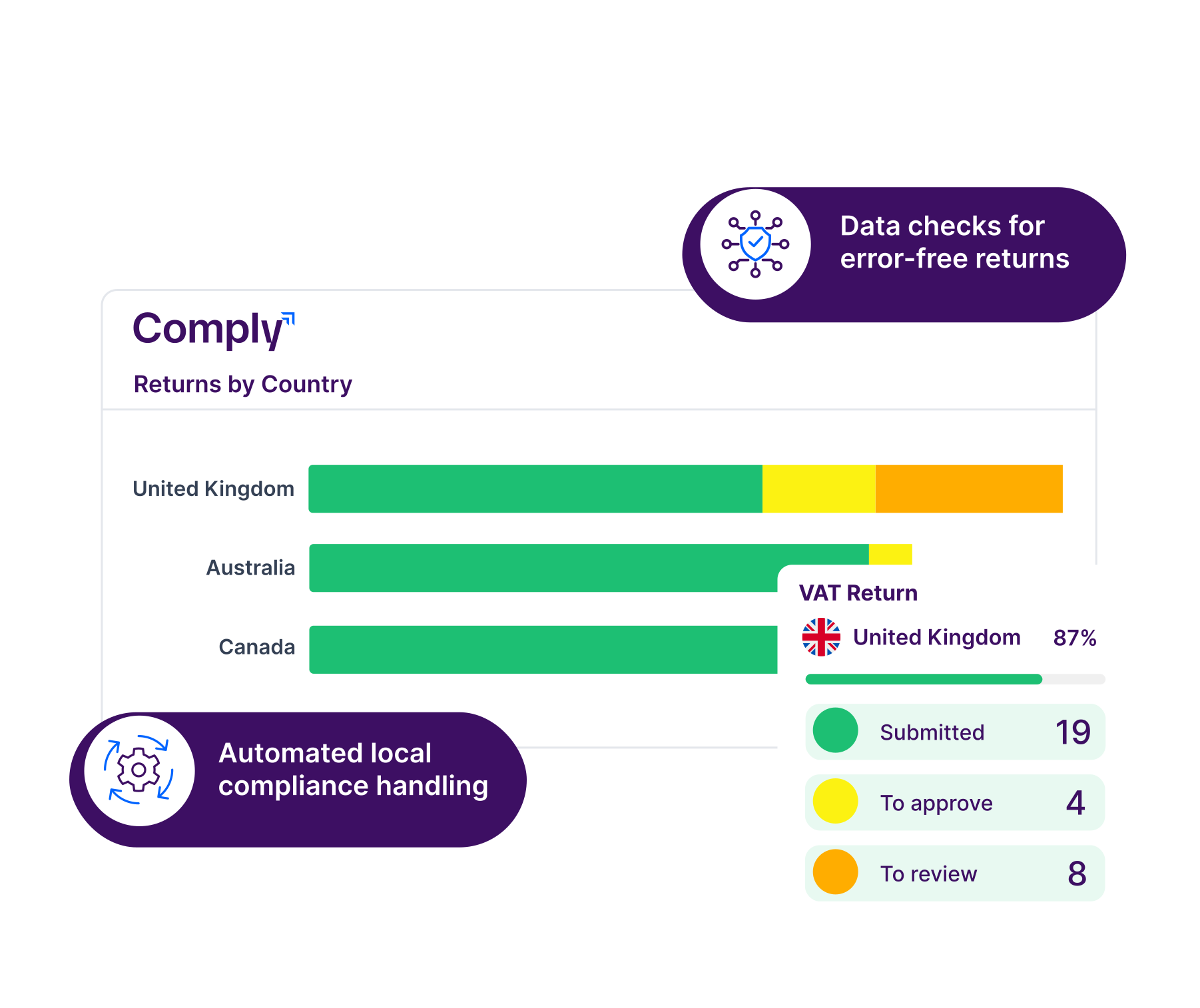
Our VAT compliance solution, Comply helps companies manage their complex, country-specific tax requirements including Greece’s VAT obligations.
Using AI and machine learning, our technology puts your VAT data through over 300 automated VAT rules, checking for errors, and preparing VAT returns for approval and submission. Comply provides a full audit trail for the Greek Tax Authority.
VAT return filing and deadlines
VAT-registered businesses must submit VAT returns monthly or quarterly, depending on the type of accounting records kept.
Filing frequency
- Monthly filing applies to businesses using double-entry bookkeeping, newly established businesses (for the first two years of operation) and certain non-resident businesses (e.g. those registered via a fiscal representative)
- Quarterly filing applies to businesses using simplified (single-entry) bookkeeping
Deadlines
- Monthly VAT returns: Due by the last working day of the month following the end of the tax period
- Quarterly VAT returns: Due by the last working day of the month following the end of the tax period
VIES declarations
VIES (VAT Information Exchange System) declarations must be submitted by VAT-registered businesses that supply goods or services to VAT-registered customers in other EU Member States.
VIES filing frequency is monthly and must be submitted by the 26th day of the month following the reporting period (or the next working day if the deadline falls on a weekend or public holiday).
Intrastat
Registration and submission
Businesses must submit Intrastat reports when movements of goods within the EU exceed specified thresholds.
Intrastat Thresholds for 2026
Intrastat Arrivals: €250,000
Intrastat Dispatches: €90,000
Deadlines and frequency
Intrastat declarations in Greece have to submit monthly. The deadline for declarations is the 26th calendar day following the reporting period.
Electronic reporting (myDATA)
Greece does not operate a traditional SAF-T system but instead uses the myDATA (My Digital Accounting and Tax Application) platform for electronic bookkeeping and tax reporting.
In general, all taxpayers subject to Greek Accounting Standards are required to comply with electronic bookkeeping and data reporting requirements, regardless of their size. Businesses must transmit accounting data (including revenue and expense information) to the myDATA platform. The reporting obligations differ depending on whether the taxpayer acts as a supplier or a buyer.
Data can be transmitted to the myDATA portal via one of the following options:
1. Accounting software (ERP integration)
2. Certified eInvoicing service providers
3. AADE’s online platform
Unlike SAF-T systems, myDATA requires the submission of transaction data in real time or near real time, rather than periodic file uploads.
Rise Above the Rest
Maximise your potential with our full suite

VAT compliance solution
Rise above complex indirect tax challenges with Comply, Fintua’s revolutionary platform for global indirect tax compliance.

VAT recovery solution
Recover automates the process of identifying and reclaiming VAT on business expenses, both domestically and internationally, helping you boost your bottom line.

Integrated payments solution
Pay simplifies international payments, reducing complexity and costs while ensuring compliance with local regulations and improving financial visibility.

eInvoicing solution
eInvoice enhances efficiency by digitising your einvoicing process, ensuring compliance across multiple jurisdictions and improving cash flow management.