
Delaying VAT compliance for an ERP upgrade creates regulatory risk, costly delays, operational inefficiencies and rework. VAT and eInvoicing are frequently addressed too late, leaving companies scrambling to retrofit processes in complex indirect tax environments with multiple disconnected systems.
SAP S/4HANA upgrade is the process of migrating from legacy SAP ERP systems to the latest SAP S/4HANA intelligent suite, which runs on the in-memory SAP HANA database. Companies upgrade to replace outdated, costly infrastructure with a faster, cloud-ready and AI-enabled platform. This shift provides real-time data, enhances operational efficiency and improves user experience and avoids the 2027 end-of-support deadline for legacy systems. This upgrade project is treated as a business improvement project, not just a technical IT change.
Despite this, many organisations pause or delay VAT compliance or eInvoicing projects while migrating to SAP S/4HANA or during broader ERP upgrades. Others say they will tackle finance transformation at a later stage. It seems logical at the time – why add more complexity to an already massively complex project?

However, VAT compliance and ERP modernisation should be complementary. When treated as part of an overall finance transformation, compliance initiatives unlock immediate value while setting SAP S/4HANA up for long-term success.
Here’s why you shouldn’t wait for your ERP upgrade to solve VAT compliance and eInvoicing.
1. Avoid rework and double implementation costs
The hidden costs of waiting are significant. Postponing VAT compliance can mean doing the same work twice such as building interfaces, running test cases and approving processes all over again. This drives up project costs, change fatigue across teams and risk of errors and delays.
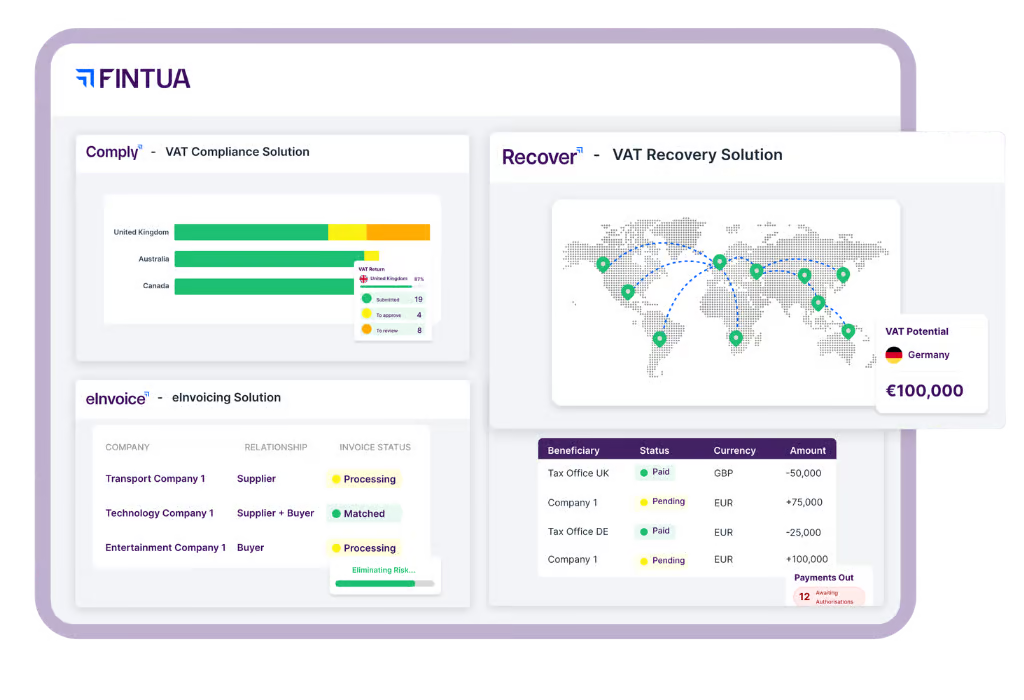
Platforms like Fintua are built to integrate with SAP and other ERPs. Work done now like interfaces, data alignment and control processes, carries forward into your S/4HANA, rather than being thrown away.
2. Prevent costly mistakes before they escalate
Delaying your VAT compliance until your ERP upgrade isn’t just about missing deadlines, it can lead to inaccurate VAT returns if your current system isn’t 100% reliable. Even small errors in VAT reporting can trigger fines, interest and audits creating unexpected financial exposure.
Using a dedicated VAT compliance solution alongside your ERP automatically identifies discrepancies, flags errors and enforces controls before data is submitted to tax authorities. This is particularly valuable during an ERP transition, when data migration and process changes increase the risk of mistakes. Implementing compliance solutions early means organisations can correct errors in real time and enter the S/4HANA environment with clean, validated data.
3. Regulatory timelines don’t wait for your ERP
Tax authorities worldwide are accelerating eInvoicing, eReporting and SAF-T mandates, independently of your ERP project timeline. Delaying VAT compliance until after an ERP upgrade increases exposure to penalties and audits, and risks fire-drill implementations at the last minute. This can lead to operational disruption and stress for finance teams.
You should look for indirect tax platforms that integrate seamlessly with your current ERP landscape allowing compliance processes to be reused post-migration rather than rebuilt. The bottom line is you can implement once and stay compliant continuously, regardless of ERP phase.
4. Design S/4HANA right the first time
Waiting until after S/4HANA go-live to implement VAT compliance automation or eInvoicing often leads to retrofitting compliance logic, which is costly and complex:
- Interfaces must be rebuilt
- Test cycles are repeated
- Teams need retraining
- Controls must be redocumented
By implementing projects in parallel, VAT and eInvoicing requirements are clearly defined upfront. Your S/4HANA processes, fields and data flows can be designed correctly from the start, keeping your ERP cleaner, standardised and easier to maintain and upgrade in the future.
SAP encourages using prebuilt connectors and external compliance platforms alongside S/4HANA to avoid embedding tax logic in the ERP core. This approach protects your ERP’s standard architecture while ensuring compliance.
5. Accelerate time-to-value from S/4 HANA
A benefit for S/4HANA is that it provides real-time finance and sales data, pairing this with an end-to-end VAT and eInvoicing platform means faster, cleaner tax reporting and cash visibility from day one of go-live.
When orders, billing, and tax data flow automatically into the one platform, finance and tax teams avoid manual work that can appear after an ERP upgrade. Embedding compliance automation during S/4HANA implementation transforms go-live into a business win, not a scramble.
6. Commercial and project leverage
Implementing a VAT compliance or eInvoicing solution alongside your ERP upgrade isn’t just operationally smarter, its commercially advantageous:
- Aligns VAT compliance costs with your S/4HANA program budget
- Secures better pricing and implementation slots with internal teams
- Reduces vendor fragmentation by using a single global supplier for VAT compliance, eInvoicing and payments
- Shares testing cycles, data migration efforts and governance frameworks
This integrated approach avoids the inefficiency and risk of juggling multiple disconnected tools.
7. Embed compliance from day one
Migrating to SAP S/4HANA is complex and it touches every part of the business. VAT compliance and eInvoicing are often overlooked until late in the project, leading to costly delays and manual workarounds.
New mandates like eInvoicing and digital filing add urgency, yet many organisations struggle with prolonged implementations and rising costs. A well-executed automation strategy offers:
- Stability and scalability
- Reduced total cost of ownership
- Streamlined vendor relationships
- Global compliance and a foundation for future growth
Automating your indirect tax compliance from the start ensures processes are embedded into core business processes, reduces errors and prevents last-minute disruptions.
Conclusion: Don’t wait, act now
Waiting for S/4HANA to address VAT compliance or eInvoicing is a risk-heavy strategy. Early integration of indirect tax automation, strong data governance and native ERP integration:
- Reduces compliance and audit risk now
- Prevents rework and doubles project costs
- Accelerates time-to-value and operational efficiency
- Aligns commercial and project priorities
Treat VAT compliance as part of your finance transformation journey, your S/4HANA go-live will be smoother, cleaner and far more valuable. Fintua enables organisations to centralise VAT compliance and eInvoicing across multiple ERPs, ensuring regulatory readiness and seamless continuity after S/4HANA go-live.
Speak to an expert about integrating VAT compliance into your S/4 HANA programme.
Authors


Helen Long
As Fintua’s Content Marketing Manager, Helen creates content that helps tax and finance professionals stay informed of the ever-changing world of VAT.