Denmark VAT guide
VAT or Merværdiafgift (MOMS) in Danish was introduced in Denmark in 1967. The Danish Tax Authority is called Skattestyrelsen or SKAT.
Recent updates
- 2024–2026: Phased implementation of digital bookkeeping and eInvoicing obligations, including SAF-T compliance.
Menu
What is the VAT (MOMS) rate in Denmark?
25%
Standard rate: 25%
Reduced rates: There is no reduced VAT rate in place.
Zero rate
The 0% rate is applied to exports or intra-community supplies.
Exempt categories: Activities in public interest, such as health, education and other listed activities such as finance and insurance.

VAT registration in Denmark
Domestic businesses
Businesses established in Denmark must register for VAT once their taxable turnover exceeds DKK 50,000 within a calendar year.
Non-established businesses (EU & non-EU):
Non-established businesses are generally required to register for VAT in Denmark
- From the first taxable supply where Danish VAT is due
- No registration threshold applies
- Exceptions may apply where the reverse charge mechanism is applicable
Distance selling
The EU-wide OSS threshold of €10,000 applies to cross-border B2C sales
- Below this threshold, VAT may be accounted for in the seller’s home country
- Above this threshold, businesses must either:
- Register for VAT in Denmark, or
- Use the One Stop Shop (OSS) scheme
Non-EU businesses
- Must register from the first taxable supply in Denmark where local VAT applies
- No registration threshold applies
- May use OSS for eligible B2C supplies
Comply – Global VAT compliance
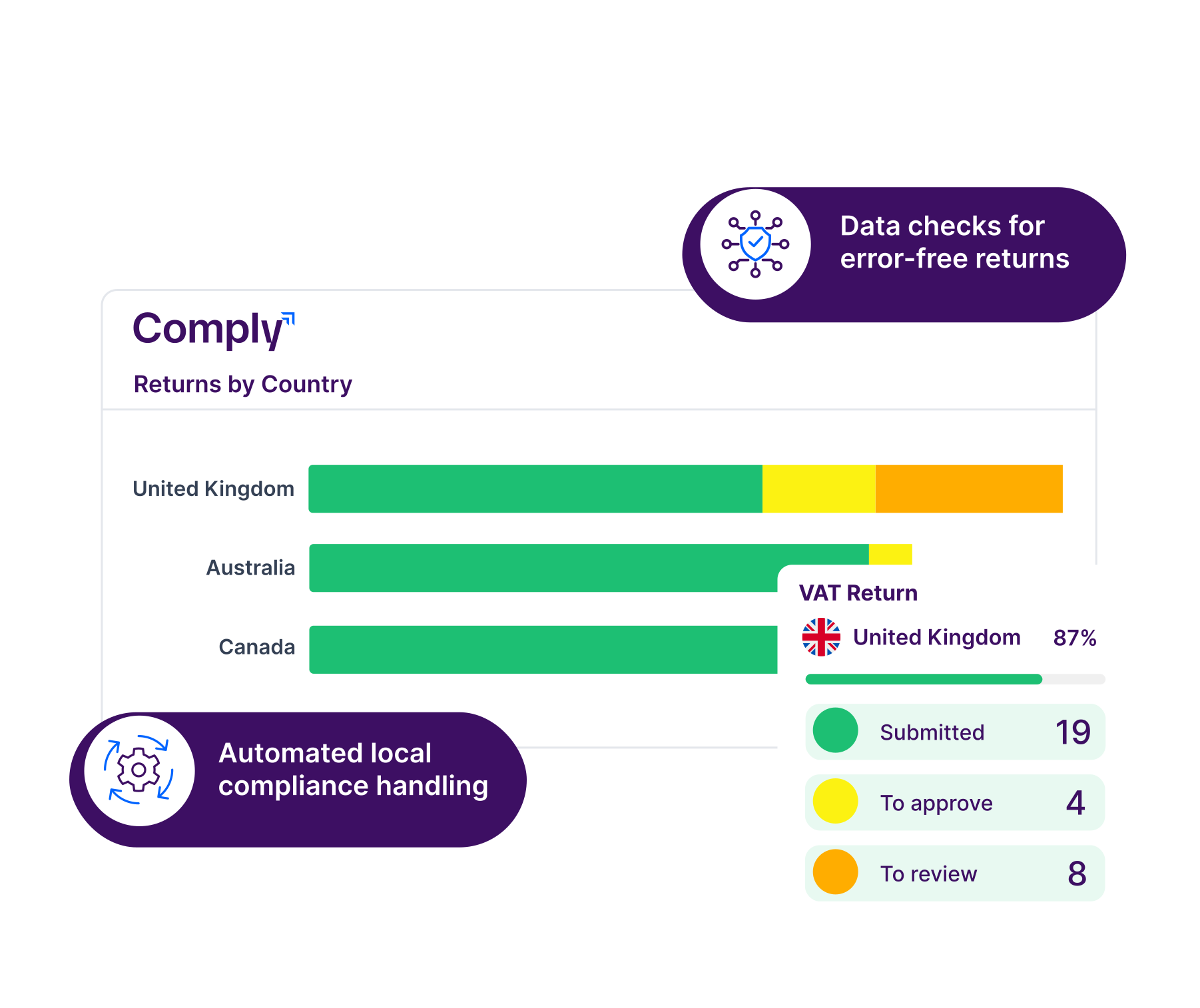
Our VAT compliance solution, Comply helps companies manage their complex, country-specific tax requirements including Denmark’s MOMS (Merværdiafgift) obligations.
Using AI and machine learning, our technology puts your VAT data through over 300 automated VAT rules, checking for errors, and preparing VAT returns for approval and submission. Comply provides a full audit trail for the Danish Tax Authorities.
eInvoicing requirements
Denmark does not currently impose a general mandatory B2B eInvoicing obligation. However, new digital bookkeeping requirements apply under the Danish Bookkeeping Act.
From 1 January 2026, businesses (including certain foreign VAT-registered entities) with an annual turnover exceeding DKK 300,000 for two consecutive years must
- Use a compliant digital accounting system
- Be able to issue and receive structured electronic invoices
- Store accounting data and invoices digitally
- Generate SAF-T (Standard Audit File for Tax) upon request by the authorities
Mandatory eInvoicing applies only to business-to-government (B2G) transactions. SAF-T reporting is not required on a regular basis but must be produced if requested during audits or inspections.
VAT return filing and deadlines
VAT returns in Denmark can be filed quarterly, monthly, or semi-annually, depending on business size and circumstances. Extended summer deadline applies to June monthly returns.
Monthly returns
- VAT-taxable turnover over DKK 50 million per year, or
- Taxpayers who have requested monthly filing
- Due by the 25th of the following month
Quarterly returns
- Newly started businesses, or
- Taxpayers who have requested quarterly filing
- VAT-taxable turnover between DKK 5–50 million per year
- Due by the 1st day of the third month following the reporting period
Semi-annual returns
- VAT-taxable turnover under DKK 5 million per year, and
- Taxpayer has consistently reported and paid on time
- Due by the 1st day of the third month following the reporting period
VAT penalties
A penalty of DKK 1,400 per period applies if a VAT return is submitted late. Interest accrues on the outstanding amount until the penalty is paid.
Fiscal representative
Non-EU businesses must appoint a local Fiscal Representative, unless they are established in Faroe Islands, Greenland, Aland Islands, Norway, Iceland or United Kingdom.
VIES Declarations
VIES (VAT Information Exchange System) filing frequency is monthly and VIES must be submitted by the 25th calendar day after the end of the respective month.
Intrastat
Registration and submission
Businesses must submit Intrastat reports when movements of goods within the EU exceed specified thresholds.
Intrastat Arrivals
- Simplified & Detailed Reporting: DKK 42,000,000
Intrastat Dispatches
- Simplified Reporting: Between DKK 11,800,000 and DKK 16,500,000
- Detailed Reporting: Over DKK 16,500,000
If the supplier has applied for the IOSS scheme, monthly return has to be submitted and payment should be carried out with the corresponding EU member states. If the supplier does not apply for the IOSS scheme, then the VAT must be paid by the buyer
Intrastat
Deadlines and frequency
Intrastat declarations must be submitted monthly. The deadline is generally the 10th working day following the end of the reporting period.
Note: Denmark categorises reporters into different groups based on trade volume, which may affect reporting deadlines.
Rise Above the Rest
Maximise your potential with our full suite

VAT compliance solution
Rise above complex indirect tax challenges with Comply, Fintua’s revolutionary platform for global indirect tax compliance.

VAT recovery solution
Recover automates the process of identifying and reclaiming VAT on business expenses, both domestically and internationally, helping you boost your bottom line.

Integrated payments solution
Pay simplifies international payments, reducing complexity and costs while ensuring compliance with local regulations and improving financial visibility.

eInvoicing solution
eInvoice enhances efficiency by digitising your einvoicing process, ensuring compliance across multiple jurisdictions and improving cash flow management.