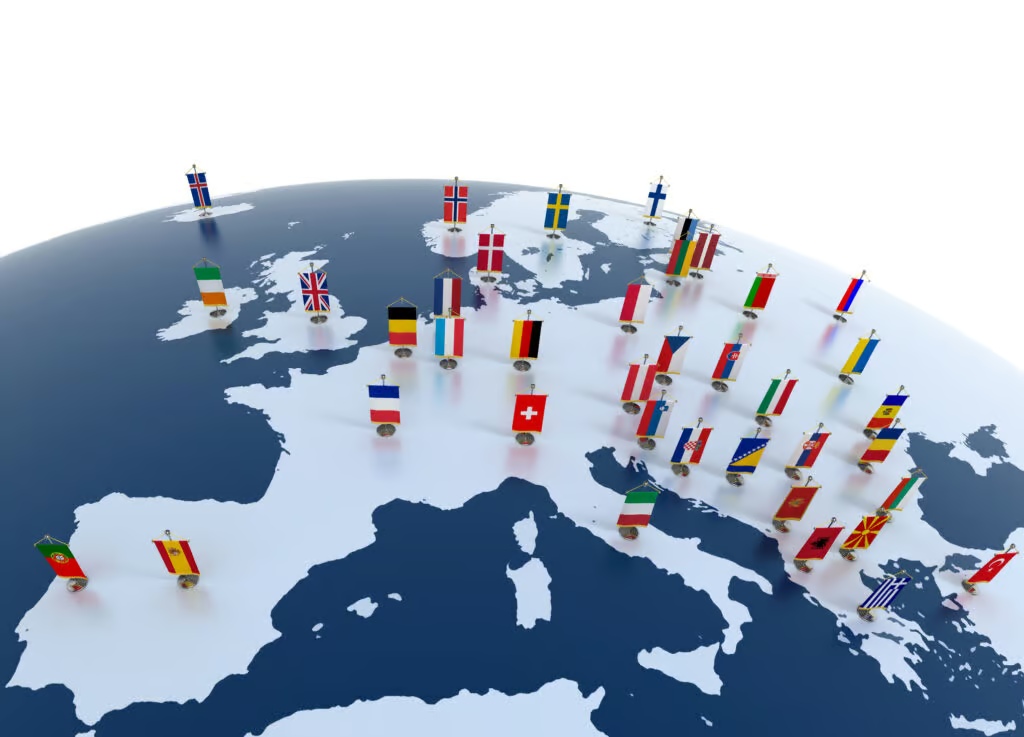

Poland is taking a major step toward digital VAT reporting with the introduction of mandatory B2B eInvoicing via the National eInvoicing System (KSeF) and updated VAT return schemas. These reforms aim to streamline compliance, improve transparency and modernise VAT processes for businesses operating in Poland.
Updated VAT Return structures
On 3 October 2025, the Polish tax authority (Krajowa Administracja Skarbowa – KAS) published working versions of the new logical structures for VAT return files:
- JPK_V7M(3) – for monthly filers
- JPK_V7K(3) – for quarterly filers
These will replace the current JPK_V7M(2) and JPK_V7K(2) schemas for reporting periods starting 1 February 2026. The updated schemas are designed to align VAT reporting with KSeF operations, introducing new data fields such as:
- NrKSeF – Unique identifier for each eInvoice in KSeF
- OFF – Indicator for invoices not issued via KSeF (e.g., system downtime)
- BFK – Specifies whether the invoice was issued electronically or on paper
- DI – Identifies documents other than invoices generated through KSeF
These additions ensure full traceability between VAT returns and invoices registered in KSeF, helping businesses and the tax authority maintain accurate, real-time records.
Mandatory eInvoicing rollout
The KSeF eInvoicing regime will be phased in as follows:
- 1 February 2026: Large taxpayers established in Poland must issue structured eInvoices via KSeF for all B2B transactions.
- February–March 2026: Companies with turnover below PLN 200 million may still issue invoices outside KSeF.
- 1 April 2026: Medium and small taxpayers must use KSeF for B2B invoices.
- April–December 2026: Paper or electronic invoices remain allowed if total monthly invoice value is below PLN 10,000.
- 1 January 2027: All taxpayers, including foreign entities with a Polish establishment, must issue invoices via KSeF, except digitally excluded taxpayers with turnover below PLN 10,000/month.
VAT deduction and compliance implications
From the start of KSeF mandatory use, VAT deduction eligibility will be linked exclusively to invoices received through the system. Key points include:
- The receipt date in KSeF becomes the official date for VAT deduction.
- The original invoice is the version stored in KSeF and cannot be altered outside the platform.
- During KSeF outages, offline invoices may be issued but must be uploaded the next working day.
- Only invoices issued via KSeF will be eligible for VAT recovery.
Businesses will need to update ERP and accounting systems to integrate with KSeF and ensure correct field mapping. Incomplete or incorrect invoice data may be rejected, delaying VAT recovery.
Exemptions
Certain transactions and services remain exempt from structured eInvoicing, including:
- Single-use tickets, toll road passes and passenger transport tickets
- Air traffic control services (e.g. EUROCONTROL route charges)
- VAT-exempt services such as banking, financial and insurance services
- Self-invoicing where the buyer or issuer lacks a Polish tax ID (NIP)
These exemptions will take effect from 1 February 2026, aligning with the initial rollout of KSeF.
What this means for businesses
The introduction of JPK_V7M(3) and JPK_V7K(3) marks a major milestone in Poland’s journey toward real-time digital VAT reporting. By linking structured eInvoicing directly to VAT returns, Poland aims to:
- Improve tax transparency
- Reduce VAT fraud
- Streamline compliance processes for businesses
Businesses operating in Poland should begin preparing now to ensure their systems, processes, and teams are ready for the KSeF transition. Early adaptation will help avoid last-minute compliance challenges and ensure smooth VAT reporting under the new rules.
Work with indirect tax experts
At Fintua, we help businesses navigate regulatory changes with clarity and confidence. From VAT compliance to multi-jurisdictional tax processes, our experts and technology keep you ahead of change.
Subscribe to our newsletter
Stay informed about the latest VAT news, trends and topics from around the globe with our monthly newsletter. Each month, we deliver insightful updates straight to your inbox, helping you stay ahead of the curve.
Authors


Lisa Dowling
Specialising in International VAT Compliance solutions, Lisa brings a wealth of knowledge and insight in her dealings with a host of international clients ranging from start-ups through to multinationals. With 21 years VAT experience behind her, Lisa has managed VAT compliance issues and solutions globally for over 11 years. Fintua have 12,000 + corporate clients in over 109 countries and many of these are members of the Fortune 500.